
There’s a quiet moment most of us experience. Maybe it’s while applying moisturizer before bed or catching your reflection in natural daylight. You notice subtle changes—skin that feels thinner, lines that linger a little longer, a softness that isn’t quite as firm as it once was.
Table of Contents
Aging isn’t the problem. Confusion is.
When every brand promises “miracle results” and “clinically proven youth,” choosing the best products for aging skin can feel overwhelming. You don’t need a 12-step routine or luxury jars lining your counter. What you need is clarity—understanding what your skin actually needs and how to give it that support.
This guide walks you through exactly how to choose creams, serums, and wrinkle treatments that deliver real results—without wasting time or money.
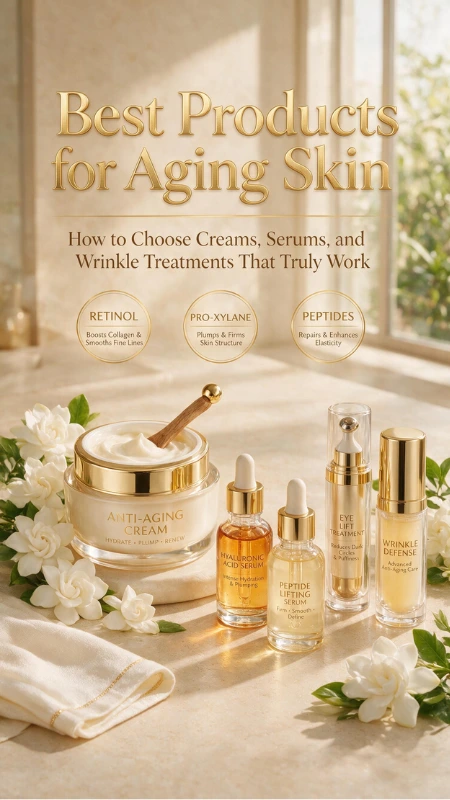
best products for aging skin
Understanding Aging Skin: What’s Really Happening to Your Skin
Before you can choose the right products, you need to understand why your skin changes.
The Biology of Skin Aging
As you age:
- Collagen production decreases by about 1% each year after your 20s.
- Elastin fibers weaken, reducing firmness.
- Cell turnover slows, causing dullness.
- Oil production declines, leading to dryness.
- Sun exposure accumulates damage over time.
According to the American Academy of Dermatology, collagen loss and UV exposure are two of the biggest contributors to visible aging. That means your skincare should focus on stimulating collagen and protecting against further damage.
Common Signs of Aging Skin
You may notice:
- Fine lines around the eyes and mouth
- Deeper wrinkles on the forehead
- Uneven skin tone or dark spots
- Loss of firmness along the jawline
- Increased dryness or rough texture
The good news? The best products for aging skin are designed to target these exact concerns—when chosen wisely.
Key Ingredients to Look for in the Best Products for Aging Skin
Skincare marketing can be flashy. Ingredients tell the real story.
Below is a breakdown of clinically supported ingredients you should prioritize.
| Ingredient | What It Does | Best For | When to Use |
|---|---|---|---|
| Retinol | Boosts collagen, speeds cell turnover | Wrinkles, texture | Night |
| Vitamin C | Brightens, protects from free radicals | Dark spots, dullness | Morning |
| Hyaluronic Acid | Hydrates and plumps | Dryness, fine lines | AM & PM |
| Peptides | Support skin structure | Loss of firmness | Night |
| Niacinamide | Reduces redness, strengthens barrier | Sensitive or uneven skin | AM & PM |
| Ceramides | Restore moisture barrier | Dry or mature skin | AM & PM |
Ingredients to Be Careful With
- High alcohol content (can dry skin)
- Heavy fragrances (especially if sensitive)
- Overuse of exfoliating acids
When selecting the best products for aging skin, always read the ingredient list before believing the label claims.
How to Choose the Best Anti-Aging Creams
Creams are your skin’s protective layer. They seal in active ingredients and prevent moisture loss.
Day Cream vs. Night Cream
Your skin behaves differently during the day and at night.
Day Cream Essentials
- SPF 30 or higher (non-negotiable)
- Antioxidants like Vitamin C or E
- Lightweight hydration
Night Cream Essentials
- Retinol or retinal
- Peptides
- Ceramides or nourishing emollients
If your current moisturizer doesn’t contain sunscreen, you must apply a separate SPF. Daily sun protection is the single most effective anti-aging step.
Quick Buying Checklist
Before purchasing a cream, ask yourself:
- Is it suited to your skin type?
- Does it contain clinically backed ingredients?
- Is it non-comedogenic?
- Has it been dermatologist-tested?
Choosing the best products for aging skin doesn’t mean buying the most expensive option. It means choosing smart formulations.
How to Choose the Right Serums for Aging Skin
Serums are concentrated treatments. They penetrate deeper and deliver targeted results.
Types of Anti-Aging Serums
1. Retinol Serums
Ideal for:
- Fine lines
- Wrinkles
- Rough texture
Start with a lower percentage (0.25%–0.5%) if you’re new to retinol.
2. Vitamin C Serums
Ideal for:
- Hyperpigmentation
- Dull skin
- Environmental protection
Look for L-ascorbic acid between 10–20% concentration.
3. Hydrating Serums
Hyaluronic acid-based formulas help plump fine lines temporarily by drawing in moisture.
4. Firming Serums
Peptides and growth factors improve elasticity over time.
When layering:
- Cleanser
- Toner (optional)
- Vitamin C (morning)
- Hydrating serum
- Retinol (night only)
- Moisturizer
- Sunscreen (morning)
Proper layering ensures you get the maximum benefit from the best products for aging skin.
Wrinkle Treatments That Actually Work
Let’s talk results.
Over-the-Counter Options
- Retinoids (most studied anti-aging ingredient)
- AHAs (improve surface texture)
- Peptide creams
Clinical studies show retinol can reduce fine wrinkles by 20–30% over 12 weeks when used consistently.
Professional Treatments
If topical treatments aren’t enough, you might consider:
- Chemical peels
- Microneedling
- Laser resurfacing
- Botox or dermal fillers
According to the American Society of Plastic Surgeons, minimally invasive procedures continue to rise each year due to effectiveness and shorter recovery times.
However, skincare should always be your foundation. Even professional treatments require maintenance with the best products for aging skin.
Building a Complete Anti-Aging Skincare Routine
Consistency matters more than complexity.
Morning Routine
- Gentle cleanser
- Vitamin C serum
- Moisturizer
- SPF 30+ sunscreen
Night Routine
- Cleanser
- Retinol serum
- Peptide or nourishing cream
- Eye cream (optional)
Keep your routine simple and sustainable. Overloading your skin with too many active ingredients can cause irritation.
Natural Face Masks to Support Aging Skin
While not replacements for clinical skincare, DIY masks can complement your routine.
Hydrating Avocado & Honey Mask
| Ingredient | Quantity | Benefit |
|---|---|---|
| Ripe avocado | ½ | Healthy fats nourish skin |
| Raw honey | 1 tbsp | Natural humectant |
| Plain yogurt | 1 tbsp | Gentle exfoliation |
Apply for 15–20 minutes once weekly.
Brightening Turmeric Mask
| Ingredient | Quantity | Benefit |
|---|---|---|
| Turmeric | ½ tsp | Anti-inflammatory |
| Greek yogurt | 1 tbsp | Lactic acid glow |
| Honey | 1 tsp | Hydration |
Always patch test before applying homemade masks.
Choosing the Best Products for Aging Skin Based on Your Skin Type
Your skin type determines how products perform.
If You Have Dry Skin
- Cream-based cleansers
- Rich moisturizers with ceramides
- Hyaluronic acid serums
If You Have Oily Skin
- Gel moisturizers
- Oil-free retinol
- Lightweight SPF
If You Have Sensitive Skin
- Fragrance-free formulas
- Lower retinol strengths
- Niacinamide for barrier repair
Tailoring your approach ensures the best products for aging skin work with your biology—not against it.
Common Mistakes to Avoid
Many people sabotage their progress unintentionally.
Avoid these:
- Skipping sunscreen
- Mixing too many strong actives
- Expecting overnight changes
- Not giving products at least 8–12 weeks
Patience and consistency outperform trend-chasing every time.
Frequently Asked Questions About the Best Products for Aging Skin
What are the best products for aging skin in your 40s and 50s?
Look for retinol, peptides, ceramides, Vitamin C, and daily SPF. Hydration becomes increasingly important as natural oil production declines.
How long does it take to see results from the best products for aging skin?
Most people notice visible improvements within 8–12 weeks of consistent use, especially with retinol and Vitamin C.
Are expensive brands always the best products for aging skin?
No. Price does not guarantee performance. Focus on ingredient quality and concentration.
Can you combine multiple anti-aging products safely?
Yes, but introduce new actives slowly. Avoid layering strong acids and retinol at the same time initially.
The Bottom Line: Aging Skin Needs Strategy, Not Hype
You don’t need perfection. You need protection, hydration, and collagen support.
When you choose the best products for aging skin, you’re not trying to erase your story. You’re strengthening your skin so it reflects your energy, confidence, and vitality.
Start with:
- Daily sunscreen
- A Vitamin C serum
- A retinol product
- A barrier-supporting moisturizer
Keep it consistent. Give it time. Track your progress.
Your skin will respond to patience far better than panic-buying ever will.
Ready to Upgrade Your Routine?
Take a few minutes today to review your current products. Check the ingredient labels. Remove what isn’t serving your skin. Replace it with formulations backed by science.
If you found this guide helpful, share it with someone who’s also searching for the best products for aging skin—because informed choices lead to confident skin.
Your future skin will thank you.