
Over 80% of body care brands on store shelves don’t own a factory. They rely on outside manufacturers to formulate, fill, and package every bottle you buy. That lotion in your bathroom? A contract manufacturer probably made it, not the brand whose name is on the label.
Table of Contents
This matters if you’re building your own line. Pick the wrong manufacturer, and you’ll deal with delayed launches, failed lab tests, or products that don’t match your vision. Pick the right one, and you get a partner who helps you grow.
Here’s everything you need to know about body care manufacturers. Who they are, what they do, and how to choose one without wasting your budget.
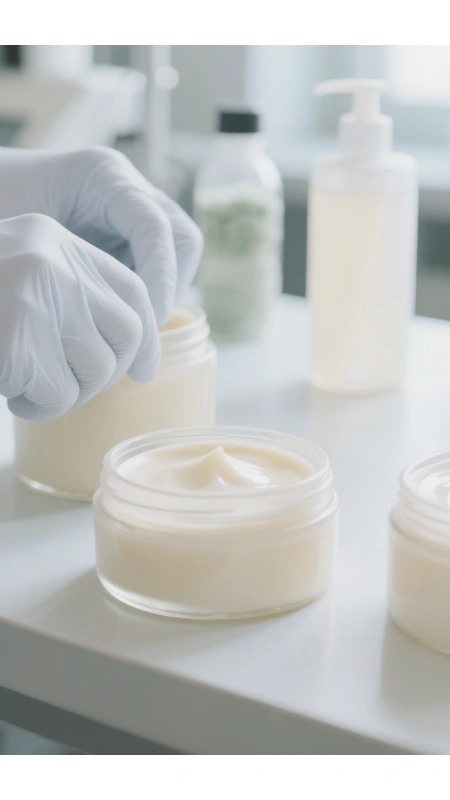
What Is a Body Care Manufacturer? (Quick Definition)
A body care manufacturer is a company that produces skincare products for other brands. They handle formulation, sourcing, production, and sometimes packaging too.
Three terms get mixed up a lot: manufacturer, formulator, and brand owner. A formulator creates the recipe. A manufacturer produces it at scale. A brand owner sells it under their own name. Sometimes one company does all three jobs.
Here’s what a typical manufacturer handles for you:
- Formulation and R&D
- Raw material sourcing
- Production and filling
- Packaging
- Regulatory compliance and lab testing
- Private labeling or white labeling
You don’t need to know how to make a body scrub from scratch. You need to know who can make it for you, correctly and on time.
Types of Body Care Manufacturers
Not all manufacturers work the same way. Your budget and goals decide which type fits you best.
1. Private Label Manufacturers
These companies already have formulas ready to go. You pick a product from their catalog, slap your logo on it, and sell it as your own.
This works best for startups and small brands testing the waters. You get low upfront costs and quick turnaround. The tradeoff? Your product won’t stand out. Any competitor can buy the same formula.
Pros:
- Low minimum order quantities (MOQs)
- Fast launch time, often under 30 days
- Lower cost per unit
Cons:
- No exclusivity
- Limited ability to tweak the formula
- Harder to build a unique brand story
2. Custom or White Label Formulators
This is different from private label. Here, you work with a chemist to build a formula from scratch. Want a body butter with Shea Butter and Vitamin E instead of mineral oil? A custom formulator makes that happen.
This route suits brands who want real differentiation. It costs more and takes longer, but you own the formula.
3. Contract Manufacturers (Full-Service OEM)
These are the big players. They handle everything from formulation to packaging to shipping. Think of them as your entire production team in one contract.
Contract manufacturers work best for brands ready to scale. You’ll need higher MOQs, usually thousands of units per SKU. But you get consistency and efficiency at volume.
4. Organic and Natural Certified Manufacturers
Some manufacturers specialize in clean beauty. They work with certifications like COSMOS, USDA Organic, or Ecocert. If your brand promises “100% natural,” your manufacturer needs the paperwork to back that claim up.
This matters more than you think. Clean beauty shoppers check labels closely. One fake claim can end your brand’s credibility overnight.
5. Niche and Specialty Manufacturers
Some manufacturers focus on very specific categories:
Vegan and Cruelty-Free Producers
No animal-derived ingredients. No animal testing, anywhere in the supply chain.
CBD and Hemp-Infused Body Care Producers
These manufacturers understand cannabinoid stability, extraction methods, and state-by-state legal requirements.
Men’s Grooming Specialists
Different scent profiles, different textures. Think heavier, less floral formulas.
Baby and Sensitive Skin Formulators
Fragrance-free, hypoallergenic, and often dermatologist-tested formulas. These manufacturers follow stricter safety protocols since babies have thinner skin barriers.
Services Offered by Body Care Manufacturers
Manufacturers don’t just mix ingredients in a vat. Good ones offer a full menu of services:
- Formulation development and free samples
- Stability and compatibility testing (does your product separate after 3 months?)
- Packaging design and sourcing
- Flexible MOQs for smaller brands
- Regulatory documentation (FDA registration, EU Cosmetics Regulation compliance)
- Fulfillment and drop-shipping support
In-House R&D vs. Outsourced Labs
Some manufacturers keep their research team in-house. Others outsource formulation to third-party labs.
In-house R&D usually means faster communication and tighter quality control. Outsourced labs can offer more specialized expertise, like a chemist who only works with anti-aging peptides such as Matrixyl or Argireline.
Ask which setup your manufacturer uses. It affects your pricing, your timeline, and how exclusive your formula stays.
Types of Products Body Care Manufacturers Create
Body care covers a wide range. Here’s what most manufacturers can produce for you:
- Body lotions and creams — often with Glycerin, Shea Butter, or Ceramides
- Body washes and scrubs — think Coffee Grounds, Sugar, or Salicylic Acid for exfoliation
- Body oils and butters — Argan Oil, Jojoba Oil, Cocoa Butter blends
- Deodorants and antiperspirants — natural options use Arrowroot Powder or Baking Soda
- Hand and foot care — Urea-based creams for cracked heels, cuticle oils
- Sun care — sunscreens with Zinc Oxide or Avobenzone, after-sun gels with Aloe Vera
- Specialty items — CBD balms, caffeine-based anti-cellulite creams, magnesium body sprays
Comparison Table — Manufacturer Types at a Glance
[INSERT TABLE]
| Manufacturer Type | Best For | Typical MOQ | Customization Level | Avg. Lead Time | Price Range |
|---|---|---|---|---|---|
| Private Label | New brands, testing ideas | 100-500 units | Low | 2-4 weeks | $ |
| Custom/White Label | Brands wanting unique formulas | 500-2,000 units | High | 6-12 weeks | $$$ |
| Contract (OEM) | Scaling brands | 2,500+ units | Medium-High | 8-16 weeks | $$ |
| Organic Certified | Clean beauty brands | 500-1,000 units | Medium | 6-10 weeks | $$$ |
| Niche/Specialty | Targeted audiences (vegan, CBD, baby) | 300-1,000 units | High | 6-14 weeks | $$-$$$ |
How to Choose the Right Body Care Manufacturer (Step-by-Step)
Don’t just Google “body care manufacturer” and pick the first result. Follow this instead.
- Define your product concept and key ingredients. Know what you want before you call anyone. Do you want a whipped body butter with Mango Butter? Or a gel-based lotion with Hyaluronic Acid?
- Research certifications relevant to your niche. If you’re going organic, check for COSMOS or USDA Organic certification upfront. Don’t take their word for it.
- Request samples and compare formulations. Test texture, scent, and absorption on your own skin. Compare at least three manufacturers side by side.
- Confirm MOQs against your budget. Can you actually sell 2,500 units in six months? Be honest with yourself here.
- Review compliance documents. Ask for Safety Data Sheets (SDS), Certificates of Analysis (COA), and stability reports before signing anything.
- Negotiate packaging and turnaround timelines. Get everything in writing. Verbal promises mean nothing when deadlines slip.
- Place a trial order first. Never jump straight to a massive first order. Test the relationship with a smaller batch.
Red Flags to Watch For When Vetting a Manufacturer
Some manufacturers will waste your time and money. Watch for these warning signs:
- No third-party lab testing available
- Unwillingness to share where ingredients come from
- Extremely low MOQs paired with zero sample policy
- Missing certifications for claimed “organic” or “vegan” status
- Vague answers about lead times or pricing
If a manufacturer dodges your questions, walk away. A good partner answers clearly, every time.
Cost Factors: What Influences Manufacturing Pricing
Your final cost per unit depends on a few things:
- Ingredient quality and sourcing. Cold-pressed Argan Oil costs more than refined mineral oil.
- Packaging complexity. Airless pumps cost more than basic jars.
- Order volume. Bigger orders lower your per-unit price.
- Certifications required. Organic certification adds cost but adds trust too.
- Customization vs. stock formulas. Custom always costs more than picking from a catalog.
Don’t chase the cheapest option. Chase the best value for your specific brand goals.
FAQs
What is the difference between private label and custom body care manufacturers?
Private label means picking an existing formula and branding it as yours. Custom manufacturing means building a brand-new formula from scratch, made only for you.
How much does it cost to work with body care manufacturers?
Costs range from $2 to $15+ per unit depending on ingredients, packaging, and order size. Custom formulas and organic certifications push prices higher.
Can small businesses order from body care manufacturers with low MOQs?
Yes. Many private label manufacturers offer MOQs as low as 100-500 units, making them ideal for startups with tight budgets.
Are body care manufacturers required to follow FDA regulations?
Yes, in the US. Body care products fall under FDA cosmetic regulations, which cover labeling, ingredient safety, and manufacturing practices.
Final Takeaway
Choosing a body care manufacturer isn’t just a business decision. It’s the foundation of your entire brand. Private label works for fast, low-cost launches. Custom formulation works for brands wanting something truly their own. Contract manufacturers handle scale. Niche specialists handle specific audiences like vegan or CBD shoppers.
Take your time. Request samples. Check certifications. Ask hard questions before you sign anything.
What kind of body care product are you hoping to launch? Drop a comment below and tell me what’s holding you back. I read every one.