Have you ever caught your reflection and wondered when your hair lost its shine? Maybe it feels rough between your fingers. Maybe it tangles too easily, frizzes at the first sign of humidity, or snaps when you brush it. If that sounds familiar, you’re not alone—and more importantly, you’re not stuck with it.
Table of Contents
Your hair goes through a lot. Heat tools, color treatments, sun exposure, stress, and even hard water slowly wear it down. The result? Weak strands that look tired and feel brittle. This is where keratin for hair enters the conversation—not as a trend, but as a science-backed solution designed to restore what your hair has lost.
Let’s break down what keratin really is, what keratin is good for, and how it improves your hair health from the inside out.
What Is Keratin and Why Does Your Hair Need It?
Keratin is a fibrous structural protein. It’s the primary building block of your hair, skin, and nails. In fact, your hair is made up of about 90% keratin protein.
Think of keratin as the internal scaffolding that keeps your strands strong and resilient.
Understanding Your Hair Structure
To understand how keratin for hair works, you need to know how your hair is built:
- Cuticle – The outer protective layer made of overlapping cells.
- Cortex – The middle layer responsible for strength, elasticity, and color.
- Medulla – The innermost core (not always present in fine hair).
When your cuticle becomes damaged—from bleaching, straightening, curling irons, or UV rays—it lifts and cracks. This allows moisture to escape and leaves your cortex exposed. The result is frizz, dullness, and breakage.
Keratin treatments and products help replenish and reinforce those weakened areas.
The Top Benefits of Keratin for Hair
If you’re wondering what keratin is good for, here’s what it can realistically do for you.
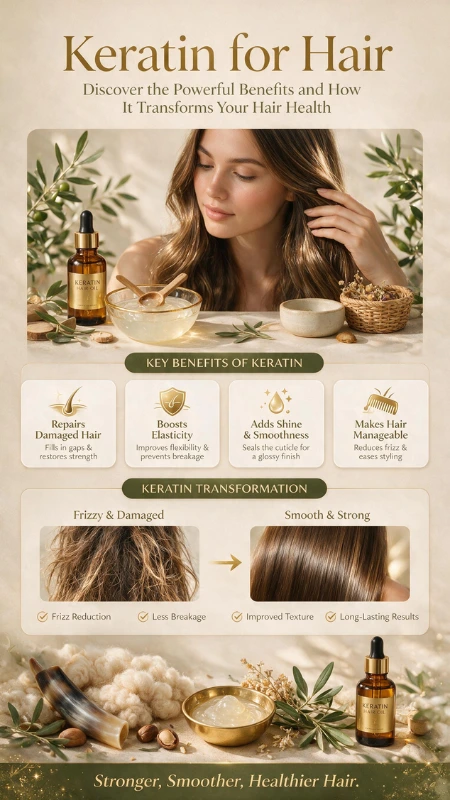
1. Strengthens Weak and Damaged Hair
When your hair loses protein, it becomes fragile. Keratin works by:
- Filling microscopic gaps in the hair shaft
- Reinforcing weakened strands
- Reducing breakage and split ends
- Improving elasticity
After consistent use, you’ll likely notice your hair feels denser and more resilient.
2. Smooths Frizz and Adds Glossy Shine
Frizz happens when humidity penetrates raised cuticles. Keratin seals those cuticles down, creating a smoother surface.
What that means for you:
- Less frizz in humid weather
- Increased light reflection (more shine)
- A sleeker overall look
If your hair tends to puff up the moment you step outside, keratin for hair can make a dramatic difference.
3. Improves Manageability
Imagine cutting your styling time in half.
With keratin-treated hair, you may experience:
- Faster blow-drying
- Easier detangling
- Less need for heavy styling products
- Softer texture
If your mornings feel rushed, smoother strands can simplify your routine.
4. Supports Long-Term Hair Health
Healthy hair isn’t just about appearance. It’s about resilience. Keratin helps:
- Reduce porosity
- Improve moisture retention
- Protect against environmental stressors
- Strengthen chemically treated hair
Over time, this protection helps prevent further structural damage.
What Is Keratin Good For? Real-Life Applications
Keratin isn’t one-size-fits-all. It works differently depending on your hair type and goals.
Keratin for Curly Hair
If you have curls, you might worry about losing your pattern. The truth is:
- Some keratin treatments soften curls.
- Others reduce frizz while preserving shape.
If you love your curls but hate the frizz, you can choose a formula designed for curl definition rather than full straightening.
Keratin for Straight Hair
Straight hair benefits from:
- Extra shine
- Reduced flyaways
- Improved smoothness
You won’t lose volume—you’ll simply gain polish.
Keratin for Color-Treated Hair
Color processing strips protein from your strands. Keratin helps rebuild what bleaching and dyeing remove.
This can:
- Improve texture
- Minimize breakage
- Extend the healthy look of your color
Keratin Treatments vs. Keratin Hair Products
Not all keratin solutions are equal. You have two main options.
| Feature | Salon Keratin Treatment | Keratin Shampoo/Mask |
|---|---|---|
| Strength | High concentration | Mild to moderate |
| Longevity | 2–6 months | Temporary |
| Cost | Higher investment | Budget-friendly |
| Results | Dramatic smoothing | Gradual improvement |
| Maintenance | Sulfate-free required | Easy home use |
If you want transformative, long-lasting smoothing, a salon treatment may suit you. If you prefer gradual strengthening without a chemical process, at-home products can still improve hair health.
How Keratin Improves Hair Health Scientifically
When keratin is applied to your hair—especially during professional treatments—it bonds to damaged areas along the cuticle.
Here’s what happens:
- The formula coats your strands.
- Heat (usually from a flat iron) seals the keratin in place.
- The protein fills porous gaps.
- The cuticle lays flatter and smoother.
This reduces water absorption from the air, which means less swelling and less frizz.
In simpler terms: keratin patches up weak spots and creates a protective shield around your hair.
Natural Ways to Support Keratin Production
Your body naturally produces keratin. If you want healthier hair from within, nutrition matters.
Nutrients That Help Boost Keratin
- Protein – Eggs, fish, chicken, beans
- Biotin (Vitamin B7) – Supports keratin infrastructure
- Zinc – Aids tissue growth and repair
- Iron – Prevents hair thinning linked to deficiency
- Vitamin C – Supports collagen production
- Vitamin A – Helps produce healthy scalp oils
If your diet lacks protein, your hair may reflect it. Supporting keratin production internally strengthens new growth.
DIY Keratin Hair Mask Recipes
If you prefer natural treatments, you can try protein-rich masks at home.
Egg & Yogurt Protein Mask
| Ingredient | Quantity | Benefit |
|---|---|---|
| Egg | 1 | Natural protein source |
| Yogurt | 2 tbsp | Strengthens and softens |
| Olive Oil | 1 tbsp | Adds moisture and shine |
How to use:
- Mix ingredients until smooth.
- Apply to damp hair.
- Leave on for 20–30 minutes.
- Rinse with cool water (hot water may cook the egg).
Avocado & Coconut Milk Repair Mask
| Ingredient | Quantity | Benefit |
|---|---|---|
| Ripe Avocado | 1 | Nourishes damaged strands |
| Coconut Milk | 3 tbsp | Light protein boost |
| Honey | 1 tbsp | Locks in moisture |
How to use:
- Blend thoroughly.
- Apply evenly from roots to ends.
- Leave for 30 minutes.
- Rinse and shampoo gently.
Use once weekly if your hair feels weak.
Are There Side Effects of Keratin for Hair?
Keratin itself is safe—it’s a protein your body already produces. However, some salon treatments may contain formaldehyde-releasing ingredients.
Possible concerns:
- Eye or throat irritation during application
- Temporary scalp sensitivity
- Over-processing if done too frequently
To protect yourself:
- Choose formaldehyde-free options
- Go to a licensed professional
- Avoid overlapping treatments too often
Always prioritize scalp health over extreme smoothness.
How to Maintain Results After Using Keratin for Hair
Once you’ve invested in keratin, proper care makes all the difference.
Post-Keratin Hair Care Tips
- Use sulfate-free shampoo
- Wash hair 2–3 times per week
- Avoid salt-heavy products
- Limit chlorine exposure
- Use a silk or satin pillowcase
- Apply heat protectant before styling
Treat your hair gently, and results can last for months.
FAQ About Keratin for Hair
Is keratin for hair safe?
Yes, keratin for hair is generally safe when you use formaldehyde-free products and follow professional guidance.
How long does keratin for hair last?
Salon treatments last between 2–6 months, depending on your hair type and maintenance routine.
Can keratin for hair cause hair loss?
Keratin itself does not cause hair loss. However, improper application or excessive heat during treatment may stress the hair shaft.
Is keratin for hair good for curly hair?
Yes. Keratin for hair can reduce frizz and enhance manageability. You can choose treatments that maintain curl structure rather than fully straighten.
How often should you use keratin for hair?
- Salon treatment: Every 3–5 months
- Keratin mask: Once per week
- Keratin shampoo: 2–3 times weekly
Is Keratin for Hair Worth It?
If your hair feels rough, dry, or constantly unmanageable, keratin could be the structural support it’s missing. It strengthens weak strands, smooths frizz, enhances shine, and improves overall resilience.
The key is choosing the right approach for your needs. Whether you opt for a professional smoothing treatment or start with a strengthening mask, consistency matters.
Your hair reflects how you treat it.
If you’re ready to transform dull, fragile strands into smoother, stronger, healthier hair, now is the time to act. Explore keratin-infused products, consult a trusted stylist, or try one of the nourishing masks above.
Don’t settle for hair that frustrates you every morning. Give your strands the protein support they deserve—and experience the confidence that comes with truly healthy hair.