
You Deserve to Know What You’re Putting on Your Skin
You’ve probably stood in the skincare aisle, turned over a product, and tried to decode a label that looks more like a chemistry exam than something meant for your face. The front says “clean,” “natural,” or “dermatologist-approved.” The back? A long list of unfamiliar ingredients that leave you guessing.
Table of Contents
Here’s the truth: your skin absorbs much of what you apply. And while not every complicated name is harmful, not every marketing claim is honest either. That’s why skin care ratings, ingredients checkers, and clean product checker tools have become essential for smart skincare shopping.
If you want clarity instead of confusion, this guide will walk you through the best tools available, how they work, and how you can use them to make informed choices—without feeling overwhelmed.
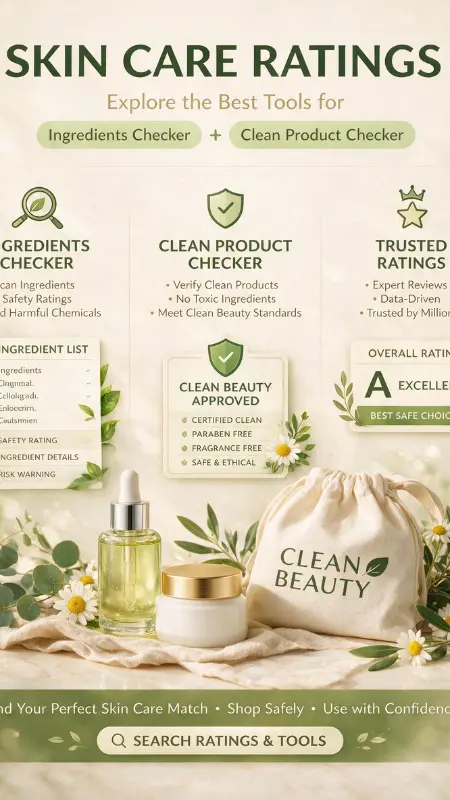
Why Skin Care Ratings Matter More Than Ever
The Shift Toward Ingredient Transparency
You’re part of a growing group of consumers who care about what goes into personal care products. Over the last decade, demand for transparency has increased dramatically. People are asking better questions:
- Is this ingredient safe long term?
- Will this trigger irritation?
- Is this brand truly cruelty-free?
- Are “clean beauty” claims regulated?
Unlike food labels, cosmetic regulations vary by country. For example:
- The European Union bans over 1,300 cosmetic ingredients.
- The United States restricts far fewer substances.
- “Clean beauty” has no universal legal definition.
That gap has led to the rise of independent skin care ratings platforms and ingredient checker tools to help you make sense of it all.
The Problems You Face as a Consumer
When shopping for skincare, you’re likely dealing with:
- Long ingredient lists in Latin or chemical names
- Fear-based marketing
- “Greenwashing” (products marketed as clean without evidence)
- Conflicting advice online
Without reliable skin care ratings, you’re left guessing. And guessing isn’t a strategy—especially if you have sensitive skin, acne, rosacea, or allergies.
What Is an Ingredients Checker?
An ingredients checker is a digital tool (website or app) that analyzes product ingredients and provides safety information, potential irritation warnings, and sometimes environmental impact scores.
Instead of manually researching each ingredient, you can:
- Search for a product by name
- Paste an ingredient list
- Scan a barcode
- Review individual ingredient breakdowns
This simplifies the research process and helps you make decisions quickly.
How Ingredients Checkers Actually Work
Most ingredients checker tools rely on:
- Public scientific databases
- Toxicology research
- Regulatory reports
- Peer-reviewed studies
They typically evaluate ingredients based on:
- Irritation risk
- Allergen potential
- Carcinogenic concerns
- Environmental toxicity
However, not all checkers use the same criteria. That’s why skin care ratings may differ between platforms.
Best Ingredients Checker Tools You Can Use Today
Let’s look at some of the most reliable options.
1. EWG Skin Deep Database
The Environmental Working Group (EWG) offers one of the most well-known skin care ratings systems.
How It Works:
- Scores ingredients from 1 to 10
- 1–2 = Low hazard
- 3–6 = Moderate hazard
- 7–10 = High hazard
Why You Might Use It:
- Extensive ingredient database
- Research-backed scoring
- Good for safety-focused decisions
Limitations:
- Does not account for ingredient concentration
- Some experts argue it can overstate risk
2. INCI Decoder
If ingredient lists intimidate you, INCI Decoder makes them understandable.
What It Does:
- Translates scientific names into plain English
- Explains ingredient purpose
- Highlights irritants and beneficial compounds
Why It’s Useful:
- Great educational tool
- Beginner-friendly
- Focuses on function, not fear
This tool is ideal if you want to understand what ingredients actually do rather than just see a rating number.
3. Think Dirty App
Perfect for shopping in-store.
Features:
- Barcode scanning
- Ingredient safety score
- Product comparisons
Best For:
- Quick decisions while shopping
- Comparing similar products
4. Yuka App
Yuka evaluates cosmetics and food products.
What It Offers:
- Safety scoring
- Cleaner alternatives suggestions
- Simple, easy-to-read interface
Clean Product Checker Tools for Ethical Shoppers
If safety is only part of your concern, a clean product checker goes further.
These tools assess:
- Sustainability
- Cruelty-free status
- Ethical sourcing
- Environmental impact
You might care about more than irritation—you might care about the planet too.
Comparison of Popular Tools
| Tool Name | Safety Rating | Clean Beauty Focus | Barcode Scanner | Free Version |
|---|---|---|---|---|
| EWG | Yes (1–10) | Moderate | No | Yes |
| Think Dirty | Yes | Strong | Yes | Yes |
| Yuka | Yes | Moderate | Yes | Yes |
| INCI Decoder | Ingredient Info | Educational | No | Yes |
Using more than one tool gives you a broader perspective on skin care ratings and ingredient safety.
What Makes Skin Care Ratings Reliable?
Not all ratings are equal. When evaluating a platform, look for:
- Transparent methodology
- Scientific references
- Clear scoring explanations
- Regular database updates
- No direct brand sponsorship bias
If you can’t see how a score was calculated, you shouldn’t blindly trust it.
How to Read Ingredient Labels Like You Know What You’re Doing
Understanding labels gives you independence from apps.
Ingredients Are Listed by Concentration
Ingredients appear in descending order. That means:
- The first 5 ingredients make up the majority of the formula.
- Ingredients below 1% can appear in any order.
If “fragrance” appears near the top and you have sensitive skin, that may matter.
Ingredients to Watch (Depending on Your Skin Type)
Potential Irritants:
- Fragrance/parfum
- Alcohol denat
- Limonene, linalool (common in essential oils)
Beneficial Ingredients:
- Hyaluronic acid (hydration)
- Niacinamide (brightening + barrier support)
- Ceramides (barrier repair)
- Glycerin (moisture retention)
Knowing this helps you interpret skin care ratings more intelligently.
DIY Skin Care? Check Ingredients Carefully
Homemade skincare feels safer—but natural doesn’t always mean gentle.
Here’s a simple example.
Soothing Oat & Aloe Face Mask
| Ingredient | Quantity | Benefit | Safety Tip |
|---|---|---|---|
| Aloe Vera Gel | 2 tbsp | Soothes & hydrates | Patch test first |
| Raw Honey | 1 tbsp | Antibacterial & moisturizing | Avoid if allergic to pollen |
| Ground Oatmeal | 1 tbsp | Calms irritation | Use finely ground oats |
Even with natural ingredients:
- Always patch test
- Avoid citrus oils on sensitive skin
- Don’t store DIY products long-term
An ingredients checker can still help you evaluate store-bought aloe or other components.
How to Choose the Right Tool for Your Needs
Not every tool serves the same purpose.
If You Have Sensitive Skin
Use:
- EWG for safety scoring
- INCI Decoder for irritation details
If You Care About Sustainability
Use:
- Yuka
- Brand certification research (Leaping Bunny, Ecocert)
If You Want Speed and Convenience
Use:
- Think Dirty barcode scanner
The key is using skin care ratings as a guide—not a final verdict.
The Limitations of Ingredients Checkers and Skin Care Ratings
Before you rely completely on any tool, consider:
- Ingredient concentration isn’t always disclosed
- Databases may not reflect new formulas
- Context matters (dose makes the difference)
- Your skin is unique
A product rated “moderate risk” may work perfectly for you. Meanwhile, a top-rated product might cause irritation.
Use ratings as a filter—not a fear trigger.
Frequently Asked Questions About Skin Care Ratings
Are skin care ratings accurate?
Most skin care ratings are based on available scientific research, but they differ in scoring methods. They’re helpful guides, not medical diagnoses.
What is the best ingredients checker for sensitive skin?
EWG and INCI Decoder are commonly used because they provide detailed breakdowns of irritation potential and ingredient functions.
Why do skin care ratings differ between apps?
Each platform uses different research criteria, risk thresholds, and definitions of “clean.” That’s why one product may score differently across tools.
Can I rely only on a clean product checker?
A clean product checker is helpful, but you should combine it with label reading, patch testing, and—if necessary—professional advice.
How You Can Shop Smarter Starting Today
Here’s a simple system you can follow:
- Identify your skin type and concerns
- Avoid known personal triggers
- Use an ingredients checker before purchasing
- Cross-reference with another rating tool
- Patch test every new product
This approach removes guesswork and gives you control.
The Bigger Picture: Empowered Beauty Choices
When you use reliable skin care ratings, you’re not just choosing a cleanser or serum. You’re choosing:
- Transparency over marketing hype
- Evidence over fear
- Confidence over confusion
You don’t need a chemistry degree to make informed decisions. You just need the right tools—and a willingness to look beyond the label.
Your Next Step
The next time you shop for skincare:
- Download one ingredients checker app
- Look up three products you currently use
- Compare their ratings
- Identify one ingredient you want to learn more about
Small actions lead to smarter habits.
If you found this guide helpful, share it with someone who’s tired of guessing what’s in their skincare. And if you’re ready to take control of your routine, start by checking the products already sitting on your bathroom shelf.
Because when it comes to your skin, informed choices aren’t optional—they’re powerful.