
You have probably bought four different mascaras this year. At least two of them are sitting in your drawer, barely used. They either clumped your lashes together, smudged under your eyes by lunchtime, or made your eyelashes stick straight down.
Table of Contents
To find the best mascara, you must stop buying based on social media hype. The secret isn’t a magic formula. It is a simple matching game between your lash type, the wand shape, and the chemistry inside the tube.
Let us fix your makeup bag. Here is exactly how to choose the right mascara for your unique eyes.
Diagnose Your Natural Lash Profile
Before you spend another dollar, look closely at your bare eyelashes in the mirror. You cannot get the results you want if you do not know what you are starting with.
Short Lashes
If your lashes barely clear your eyelid margin, you have short lashes. Your goal is length and separation.
Avoid heavy, thick formulas. They weigh your short hairs down. Instead, search for formulas with lengthening fibers like nylon or rayon. These tiny fibers cling to the tips of your natural hair, acting like mini extensions.
Sparse or Thin Lashes
If you can see clear gaps along your lash line, your lashes are sparse. Your hair texture is likely very fine.
You need volume and density at the root. Look for formulas containing thickeners like beeswax, carnauba wax, or collagen. These ingredients coat each individual hair to double its thickness. You want a dark, dense pigment base to make your lash line look fuller.
Straight or Downward-Pointing Lashes
Do your lashes point straight down? Do they refuse to stay up after using a lash curler? This is common with stubborn, straight hair.
You must avoid water-based formulas. Water relaxes the hair curl, much like rain ruins a blowout. You need quick-drying, lightweight polymers or waterproof formulas. They lock your curl in place like hairspray.
The Wand Matrix: Matching Brush Shape to Lash Goal
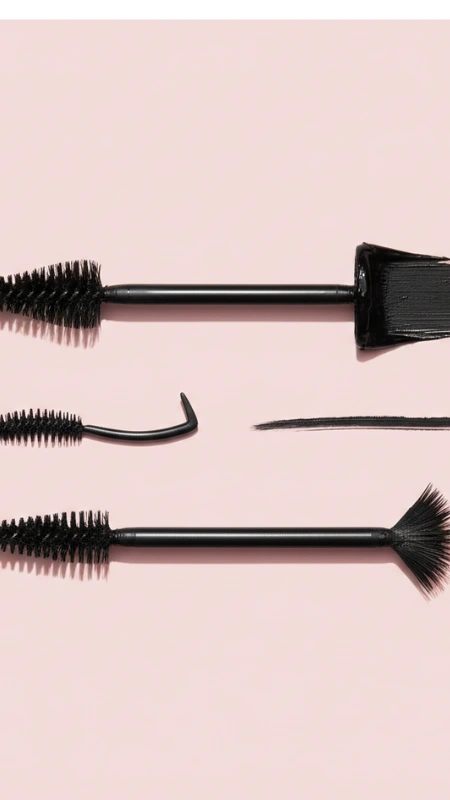
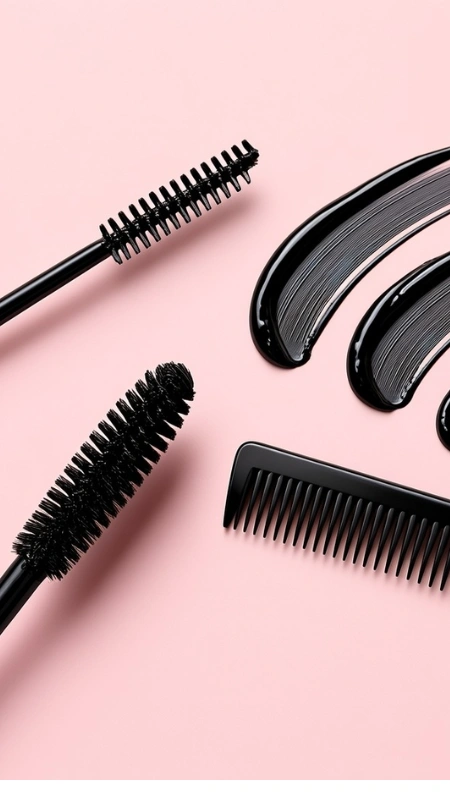
The chemical formula keeps the product on your eyes. But the brush shape does all the styling. If you use the wrong brush, even the most expensive formula will look terrible.
Use this quick guide to find your perfect wand match.
Wand Comparison Table
| Wand Shape | Primary Benefit | Best Lash Match | Pro Tip |
|---|---|---|---|
| Hourglass (Nylon Fiber) | Maximum volume and fluffiness | Sparse, thin lashes | Avoid if your lashes are very short; the large brush will smudge your eyelids. |
| Molded Plastic / Comb | Precise separation and length | Short, clumpy-prone lashes | Place the comb at the very root and pull straight up to separate every hair. |
| Curved Wand | Lift and hold curl | Straight, drooping lashes | Match the curve of the wand to the curve of your eyelid. |
| Micro / Skinny Wand | Lower lash detail & precision | Short lashes, monolids | Great for capturing tiny, hard-to-reach inner corner hairs. |
Why Brush Material Matters
Brushes are made of either nylon bristles or molded plastic.
- Nylon Brushes: These are soft and bushy. They hold a large amount of product between the bristles. This is what you want for a thick, dramatic, false-lash look.
- Plastic/Elastomer Brushes: These are stiff and precise. They work like a comb to separate each lash. Choose plastic if you hate clumps and want clean, natural definition.
Decoding the Formula: Tubing vs. Traditional vs. Waterproof
Now let us look at the liquid inside. Mascara formula chemistry falls into three distinct categories. Picking the wrong one leads to raccoon eyes, smudging, or broken eyelashes.
Traditional Wax-Based Formulations
This is the classic option. These formulas are emulsions of water, cosmetic waxes (like paraffin or beeswax), and black pigments.
- Best for: Customizable drama. You can easily layer these formulas to build intense volume.
- Ingredients to look for: Panthenol and castor oil to keep lashes soft.
- The downside: They can smudge if you have oily eyelids or use a heavy eye cream.
Tubing Mascara (Polymer Formulations)
Tubing formulas do not paint your lashes with pigment. Instead, they use film-forming polymers (look for Acrylates Copolymer or Polyurethane-35 on the label) to wrap around each individual lash.
- Best for: Anyone who suffers from smudging, flaking, or sensitive eyes.
- How they wash off: You do not need makeup remover. Warm water and gentle pressure from your fingers will slide the “tubes” right off your lashes.
- The downside: They offer great length, but they do not build heavy volume.
Waterproof Formulations
Waterproof formulas contain zero water. They are solvent-based, using ingredients like Isododecane and waterproof polymers to repel moisture.
- Best for: Straight lashes that drop immediately, watery eyes, hot weather, and gym sessions.
- The downside: They are dry and rigid. You must use a bi-phase, oil-based makeup remover (like one containing jojoba oil or mineral oil) to dissolve them. Never scrub your eyes to remove waterproof mascara, or your lashes will snap.
How to Apply Mascara for Zero Clumping and Maximum Lift
Even the best mascara will fail if you paint it on poorly. Follow this professional makeup artist sequence for clean, lifted results.
1. Prep and Curl
Start with clean, dry eyelashes. Any oil or leftover eye cream from the night before will make your product smudge.
Take a clean eyelash curler. Place it at the very base of your lashes. Squeeze gently for five seconds. Move the curler to the middle of the lash length and squeeze again. This creates a natural curve instead of a harsh L-shape angle.
2. Scrape the Excess
Do not pull the wand out of the tube and go straight to your eyes. The tip of the wand holds a large clump of excess product.
Gently scrape the excess formula off the tip and sides of the brush onto the inner lip of the tube. The brush should look almost dry. You can always add more layer by layer, but it is very hard to remove excess wet product once it is on your eye.
3. The Wiggle-and-Hold Method
Place the mascara wand at the absolute root of your lashes. Press it gently against the skin of your eyelid.
Wiggle the wand horizontally. This deposits density at the base of your lash line, which makes your lashes look thicker at the root.
4. Pull and Roll
Once you have wiggled the brush at the roots, pull the wand slowly up through the lash tips.
As you reach the very ends, gently roll the brush forward. This curls the tip of the lash back and keeps the ends thin and pointed, rather than blunt and clumpy.
5. Clean Up and Separate
Wait 30 seconds for the formula to dry slightly. If you see any lashes stuck together, take a clean, dry spoolie brush or a metal lash comb. Comb through from root to tip to separate the hairs.
3 Common Mascara Mistakes Ruining Your Lashes
Are you doing any of these three things? Stop immediately to save your lashes and your money.
Pumping the Wand in the Tube
When you pump the wand up and down to get more product, you push air into the tube. This dries out the formula in weeks instead of months. Also, it forces bacteria deep into the bottle.
The Fix: Gently twist and swirl the wand inside the cylinder to collect product.
Keeping Your Tubes Too Long
Mascara has the shortest shelf life of any beauty product. You must toss it out three months after opening. Every time you use it, you introduce bacteria from your eyes into the dark, wet tube.
Old mascara dries out, flakes onto your cheeks, and can cause painful styes or pink eye. If your product smells sour or metallic, throw it away.
Layering Over Dry Mascara
Do you apply a fresh coat of mascara before a night out over the coat you applied at 8:00 AM? This is a recipe for spider legs.
Once traditional mascara dries, the wax creates a hard shell. Applying more product on top causes dry clumps and breaks your lashes.
The Fix: If you want to touch up your makeup, use a damp cotton swab to remove your daytime mascara. Start fresh, or use a soft tubing formula that can be easily refreshed.
Frequently Asked Questions
What is the best mascara for sensitive eyes or contact lens wearers?
The best mascara for sensitive eyes is a hypoallergenic tubing mascara. Traditional formulas can flake off. Those tiny dry flakes then fall into your eyes, causing redness and scratching your contact lenses. Tubing formulas do not flake. They only come off when you wash them with warm water.
How do I stop my mascara from smudging under my eyes?
Smudging happens when the natural oils on your skin mix with the waxes in your mascara. To stop this, apply a light dust of translucent silica powder under your eyes before applying makeup. This absorbs the excess oil. Alternatively, switch to a tubing mascara, which is completely resistant to skin oils.
What is the difference between lengthening and volumizing mascara?
Lengthening mascaras have thin, plastic brushes and runny formulas containing nylon or rayon fibers to extend the tips of your lashes. Volumizing mascaras use thick, bushy nylon brushes and heavy, wax-based formulas to build thickness and density along the middle of the lash hair.
How do I safely remove waterproof mascara without losing eyelashes?
Never scrub your eyes with cotton pads. Instead, saturate a cotton pad with an oil-based bi-phase makeup remover. Press the wet pad against your closed eyelid for 30 seconds. This gives the oil time to break down the waterproof polymers. Gently swipe downward to remove the product.
To wrap it up, the secret to gorgeous lashes is matching. Know your lash type, select your wand shape, and pick the formula chemistry that fits your lifestyle.
What mascara are you currently using? Does it smudge, clump, or drop your curl? Let us know in the comments below, and we can help you find your perfect upgrade!