
You know that small, quiet moment when you’re getting ready—maybe before work, a date, or just a regular day—and makeup becomes a kind of ritual? It’s supposed to feel good. But if you’ve ever wondered what happened behind the scenes before that lipstick hit the shelf, the experience can change fast.
Table of Contents
Because once you connect the dots between beauty and animal testing, it’s hard to “un-know” it. The upside is that you’re not stuck. Today, you can build a routine you love with cruelty free makeup brands and choose products not tested on animals—without sacrificing color payoff, wear time, or price.
This guide walks you through what “cruelty-free” really means, how to verify it, how animal testing laws affect brands, and how to shop with confidence (plus a few simple DIY alternatives with ingredient tables).
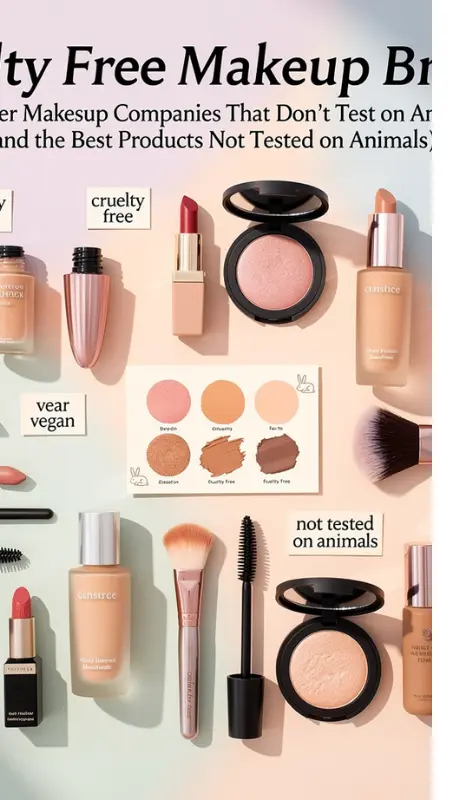
What “Cruelty-Free” Actually Means (and Why It Gets Confusing)
“Products not tested on animals” — the practical definition
In everyday shopping terms, cruelty-free usually means:
- The finished makeup product isn’t tested on animals.
- The ingredients aren’t tested on animals.
- The brand doesn’t allow third-party testing on its behalf (including via suppliers or regulatory routes).
Here’s the catch: marketing language can be slippery. A brand might say “not tested on animals” while only referring to the final formula—not the ingredients. That’s why verification matters more than front-label claims.
Helpful references you can check:
- Leaping Bunny (Cruelty Free International): widely recognized certification standards and brand directory.
- PETA Beauty Without Bunnies: large database of participating brands.
Cruelty-free vs vegan makeup (you’ll see both terms)
These two labels aren’t interchangeable:
- Cruelty-free = no animal testing
- Vegan = no animal-derived ingredients
So you can absolutely find:
- Cruelty-free makeup that isn’t vegan (common because of beeswax, lanolin, carmine, etc.)
- Vegan makeup that isn’t cruelty-free (less common, but possible depending on a brand’s testing policy)
If your goal is “no animal harm in either testing or ingredients,” you’ll want both: cruelty-free and vegan.
How to Verify Cruelty Free Makeup Brands (Without Falling for Greenwashing)
Look for trusted certifications (not just a random bunny icon)
A bunny logo on packaging can be meaningful—or it can be decorative. What you want is a recognized program with standards behind it.
Two common resources:
- Leaping Bunny: tends to be viewed as the gold standard because it requires supply chain monitoring and commitments from ingredient suppliers.
- PETA Beauty Without Bunnies: useful for quick checks; many shoppers use it as a starting point.
Because brand policies change, the safest habit is simple: verify before you buy, especially if it’s a new brand to you.
Use this quick “brand honesty” checklist
When you’re checking a brand site (or emailing customer service), these questions cut through the fluff:
- Do you test finished products on animals? (You want: No)
- Do your ingredient suppliers test on animals? (You want: No)
- Do you allow any third party to test on your behalf? (You want: No)
- Do you sell in markets where animal testing is required for cosmetics? (You want a clear, consistent policy.)
- Are you certified by Leaping Bunny or listed by PETA? (A strong plus.)
If a brand won’t answer clearly—or hides behind vague statements—you’re allowed to move on.
Watch for phrases that sound good but don’t prove much
Some common “half-promises” include:
- “Not tested on animals” (without mentioning ingredients)
- “We do not test on animals except where required by law”
- “Our suppliers confirm compliance” (without stating no animal testing)
If you’re building a cruelty-free routine, you shouldn’t have to decode corporate poetry.
Animal Testing Laws: Why the Same Brand Looks Different Around the World
The EU ban (a major shift)
The European Union has long been associated with strong restrictions on cosmetics animal testing and the sale of newly animal-tested cosmetic products. This is often referenced by shoppers as proof that cruelty-free options are realistic at scale—not just niche.
Where to look for accurate summaries: European Commission pages and regulatory explainers from Cruelty Free International.
China regulations (why shoppers still ask about it)
China’s cosmetics regulations have changed over time, and you’ll still see confusion online. Some products may avoid certain testing requirements under specific conditions, and rules can differ for domestic vs. imported items and for special-use categories.
Because regulations evolve, your best move is not guessing—it’s verification:
- Check the brand’s current public policy statement.
- Cross-check with a reputable cruelty-free database (Leaping Bunny/PETA).
- Look for recent updates from credible advocacy groups.
Cruelty Free Makeup Brands: Where to Start (By Budget and Style)
Instead of throwing a random list at you, here’s a smarter way to discover makeup companies that don’t test on animals: pick your budget lane, then verify brands you already see in stores.
Note: Brand statuses can change. Before you purchase, confirm through Leaping Bunny, PETA, and the brand’s own policy page.
Drugstore cruelty-free makeup (budget-friendly wins)
If you want affordable staples you can replace often (mascara, brow gel, concealer), drugstore is the easiest place to start.
What to look for at this price point:
- Tubing mascaras (less smudging, easier removal)
- Multi-use cream products (cheek + lip)
- Simple complexion formulas you can shade-match easily
Examples many shoppers check first (verify before buying):
- e.l.f. Cosmetics (widely recognized as cruelty-free; many vegan options)
- NYX Professional Makeup (often listed in cruelty-free databases; parent company considerations vary by shopper)
- Essence (commonly sought for budget mascara)
Mid-range cruelty-free makeup (performance + variety)
Mid-range is where you often get:
- Better undertone variety
- More refined textures (blush/bronzer that blends faster)
- Longer wear for base products
What to prioritize:
- A foundation or skin tint that matches your undertone
- One dependable concealer
- A setting powder that works with your skin type
High-end cruelty-free makeup (luxury feel, pro finishes)
If you love the “treat yourself” side of makeup, cruelty-free isn’t off-limits.
What tends to be better here:
- Complexion finish (skinlike blur, smoother wear)
- Eyeshadow textures (less fallout, richer color)
- Packaging and shade curation
Indie cruelty-free makeup (for color lovers)
Indie brands are often where you’ll find:
- Unusual colors (multichromes, duochromes)
- Bolder pigments
- More experimental product formats
Tip for indie shopping: check shipping times, returns, and ingredient sensitivities—especially with highly pigmented eye products.
Build a Full Face With Products Not Tested on Animals (Simple, Practical Picks)
You don’t need a 25-step routine to feel put together. You just need a few basics that work together.
Face essentials (choose based on your skin’s real life)
- Primer
- Hydrating: if you get flaky around the nose or cheeks
- Pore-blurring: if texture shows up under foundation
- Foundation / skin tint
- Light coverage: everyday, quick blending
- Medium/full: events, photos, long wear
- Concealer
- Under-eye: look for hydrating formulas
- Spot concealing: slightly thicker, more pigment
- Powder
- Translucent: general set
- Tinted: extra coverage + tone balance
- Setting spray
- Dewy: if you look dry by midday
- Matte: if your T-zone takes over
Shade range note: if you’ve struggled to find your match before, prioritize brands that show swatches on multiple skin tones and list undertones clearly.
Eyes & brows (the fastest “I’m awake” upgrade)
- Mascara
- Tubing if you hate raccoon eyes
- Volumizing if you want bold lashes fast
- Eyeliner
- Pencil for soft definition
- Liquid for sharp wings
- Eyeshadow
- One neutral palette + one “fun” single is plenty
- Brows
- Pencil for gaps
- Gel for hold and shape
Lips (low effort, high impact)
- Tinted balm for daily wear
- Lip liner if you want shape without heavy lipstick
- Gloss or oil if you want comfort and shine
- Long-wear lipstick for events (pair with balm prep)
How to Shop Cruelty-Free Without Getting Overwhelmed
If you’ve ever tried to “go cruelty-free” and ended up with 30 tabs open, you’re not alone. Use this system instead.
A 5-step cruelty-free shopping method
- Start with a directory (Leaping Bunny or PETA).
- Read the brand’s policy page (look for ingredient + third-party clarity).
- Decide how you feel about parent companies (some shoppers avoid them; others focus on the brand itself).
- Check vegan status only if you need it (many brands have mixed lines).
- Save a short list in your phone so you don’t re-research every purchase.
Budget tips that actually help
- Replace items as they run out (no waste, no panic spending).
- Start with the products you rebuy most:
mascara, cleanser, concealer, brow gel - Buy mini sizes when possible.
- Choose multi-use products (lip/cheek tint, face palette, stick blush).
DIY Cruelty-Free “Recipes” (With Ingredient Tables)
Sometimes you want a simple option you can control—especially for balms and creams. These are not perfect replacements for lab-formulated makeup, but they can be fun, practical, and budget-friendly.
Safety note: patch test first, keep tools sanitized, and use cosmetic-grade pigments for anything used on lips or near eyes.
DIY Tinted Lip Balm (Beginner-Friendly)
Ingredients
| Ingredient | Amount | Purpose | Cruelty-free sourcing tip |
|---|---|---|---|
| Shea butter (or cocoa butter) | 1 tbsp | Nourish + structure | Look for ethical/fair-trade suppliers |
| Jojoba oil (or sweet almond oil) | 1 tsp | Slip + comfort | Choose cold-pressed, cosmetic-grade |
| Candelilla wax (vegan) | 1 tsp | Firmness (alt to beeswax) | Confirm it’s intended for cosmetics |
| Lip-safe mica or iron oxides | 1/8 tsp | Tint | Only use pigments marked lip-safe |
| Vitamin E (optional) | 1–2 drops | Helps slow rancidity | Plant-derived vitamin E is widely available |
Steps
- Melt butter + wax gently (double boiler works best).
- Stir in oil, remove from heat.
- Add pigment slowly until you like the tint.
- Pour into a clean tin or tube and let set.
DIY Cream Blush (Cheeks + Lips)
Ingredients
| Ingredient | Amount | Purpose | Notes |
|---|---|---|---|
| Mango butter (or shea butter) | 1 tsp | Cream base | Mango butter often feels less greasy |
| Jojoba oil | 1/2 tsp | Blendability | Add drop-by-drop to control texture |
| Iron oxides or mica (skin-safe) | Pinch | Color | Build slowly; a little goes far |
| Arrowroot powder (optional) | 1/4 tsp | Softer finish | Helpful if your skin gets oily |
Steps
- Soften butter to a workable texture.
- Mix pigment in tiny amounts until you reach your shade.
- Add arrowroot if you want less slip.
- Store in a clean small jar and apply with fingers or a sponge.
DIY Clear Brow Gel (Light Hold)
Ingredients
| Ingredient | Amount | Purpose | Notes |
|---|---|---|---|
| Aloe vera gel | 1 tsp | Flexible hold | Alcohol-free formulas feel less drying |
| Vegetable glycerin | 2–3 drops | Softness | Too much can feel sticky |
| Activated charcoal (optional) | Pinch | Tint | Use extremely sparingly |
Steps
- Mix in a small dish.
- Store in a sanitized container.
- Apply with a clean spoolie.
Common Myths About Cruelty-Free Makeup (So You Don’t Get Misled)
Myth 1: “Cruelty-free means vegan.”
No. You can have a cruelty-free mascara that still contains beeswax or lanolin. If vegan matters to you, check the specific product ingredient list.
Myth 2: “Natural brands don’t test on animals.”
Natural doesn’t automatically mean ethical, and it doesn’t automatically mean safe either. You still need a cruelty-free policy and credible verification.
Myth 3: “If it’s in a big store, it must be cruelty-free.”
Retail presence is not proof. Stores carry a mix of cruelty-free and non–cruelty-free lines.
Myth 4: “Any bunny logo is a certification.”
Some brands create their own icons. Look for recognized program marks and verify in the official directories.
FAQ: Cruelty Free Makeup Brands (Quick Answers You Can Use)
How do you know cruelty free makeup brands are truly cruelty-free?
You verify them through trusted resources like Leaping Bunny or PETA, then confirm the brand’s stance on ingredient testing and third-party testing on their website.
Are cruelty free makeup brands more expensive?
Not necessarily. You can find cruelty-free options at drugstore prices and luxury prices. If you’re keeping your budget tight, start with one swap (mascara or brow gel) and build from there.
What does “not tested on animals” mean on makeup labels?
It can mean several things. Sometimes it refers only to the finished product. You want clarity that the brand does not test ingredients either, and doesn’t allow third parties to test on its behalf.
Can cruelty free makeup brands sell in countries that require animal testing?
Policies vary and regulations change. If a brand sells in regions with complex testing rules, look for an explicit, current statement from the brand and cross-check with an up-to-date cruelty-free database.
Are cruelty free makeup brands better for sensitive skin?
Cruelty-free is about testing ethics, not formulation gentleness. If your skin is reactive, check for fragrance, essential oils, and common irritants, and patch test when trying anything new.
Conclusion: You Can Choose Beauty Without the Compromise
Switching to cruelty free makeup brands isn’t about being perfect. It’s about making your routine match your values—one product at a time—so your everyday “getting ready” moment stays a good one.
Your next step (simple and doable)
Pick one item you’ll replace next (mascara, lip balm, concealer), verify two or three brands via Leaping Bunny/PETA, and choose the one that fits your budget and preferences.
If you want, tell me what you’re trying to replace first (foundation, mascara, lipstick, brows, or skincare) and your budget range—then you’ll get a short cruelty-free shortlist tailored to you.