
Have you ever woken up with skin so radiant it looks like you’ve just had a professional facial? That glowing, “I woke up like this” complexion isn’t just luck—it’s the result of a well-executed night skincare routine working behind the scenes while you sleep.
Here’s the truth: your skin doesn’t take a break when you do. In fact, it kicks into high gear. While you’re dreaming, your skin is busy repairing damage from the day, boosting collagen production, and shedding dead cells at a rate nearly 30% faster than during daylight hours. But here’s the catch—if you’re not applying the right products in the right order before bed, your skin is missing out on this nightly renewal.
Table of Contents
Have you ever looked in the mirror in the morning and wondered why your skin doesn’t look as refreshed as you feel? It might be because your night skincare routine isn’t giving your skin the support it needs. Whether you’re dealing with dry patches, stubborn breakouts, or the first signs of aging, what to apply before bed can make all the difference. In this guide, we’ll walk you through the perfect night skincare routine step by step, so you can wake up to the best version of your skin.
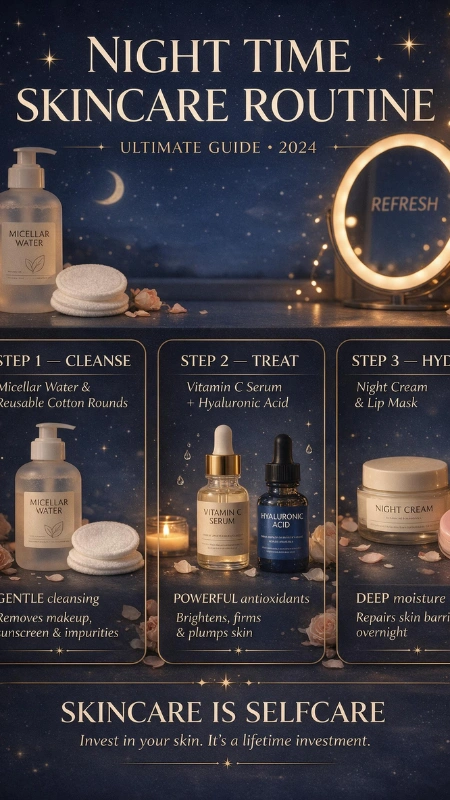
🌙 Why Your Skin Needs a Nighttime Routine More Than Ever
Your skin operates on a 24-hour cycle, and nighttime is its prime time for repair. Research shows that cell turnover and collagen production ramp up significantly after dark. Without the day’s environmental aggressors—like UV rays, pollution, and stress—your skin can fully focus on renewal.
Here’s what happens while you sleep:
✅ Your skin barrier strengthens, helping to lock in moisture and keep irritants out.
✅ Transepidermal water loss increases, meaning your skin loses more moisture, so hydration becomes crucial.
✅ Cortisol levels drop, allowing inflammation to settle and your skin to heal from daily irritation.
✅ Blood flow to the skin increases, delivering essential nutrients for repair.
Perhaps most importantly, the products you apply at night have a better chance of penetrating deeply. Without the interference of sweat, dirt, or makeup, active ingredients can absorb more effectively. This is why dermatologists often recommend using your most potent treatments—like retinol or exfoliating acids—before bed. It’s the optimal time for these powerhouse ingredients to deliver visible results.
So, if you’ve been skipping your night skincare routine or just going through the motions, it’s time to give your skin the attention it deserves while you rest.
✨ The Perfect Step-by-Step Night Skincare Routine
Follow this dermatologist-approved order to maximize the benefits of your night skincare routine. Remember, the general rule is to apply products from thinnest to thickest texture.
Step 1: Double Cleanse – The Non-Negotiable First Step
Start your routine with a thorough cleanse—and yes, that means double cleansing. This two-step process ensures that every trace of makeup, sunscreen, and pollutants is removed from your skin.
Here’s how to do it right:
- First Cleanse (Oil-Based): Use an oil, balm, or micellar water to dissolve makeup, sunscreen, and excess sebum. These products cling to oil-based impurities that water alone can’t remove. Massage gently for 30-60 seconds to break everything down.
- Second Cleanse (Water-Based): Follow with a gel, foam, or cream cleanser to remove sweat, dirt, and any remaining residue. This step ensures your pores are truly clean and ready to absorb the rest of your products.
Why it matters:
Sleeping in makeup or sunscreen doesn’t just lead to clogged pores—it can accelerate aging. These products can trap free radicals against your skin, causing damage while you sleep. Plus, a clean canvas ensures that your serums and moisturizers can penetrate effectively.
Product Recommendations:
| Skin Type | Oil Cleanser | Water-Based Cleanser |
|---|---|---|
| Dry | CeraVe Hydrating Cleansing Oil | La Roche-Posay Toleriane Hydrating Cleanser |
| Oily | The Inkey List Oat Cleansing Balm | Neutrogena Oil-Free Acne Wash |
| Sensitive | Clinique Take the Day Off Balm | Vanicream Gentle Facial Cleanser |
| Combination | Banila Co Clean It Zero | CeraVe Foaming Facial Cleanser |
Pro Tip: If you wear heavy makeup or waterproof sunscreen, spend a full minute massaging your oil cleanser to ensure everything dissolves completely.
Step 2: Exfoliate (2-3 Times a Week) – The Secret to Glowing Skin
Exfoliation is the secret weapon in any effective night skincare routine, but it’s not an every-night step. Two to three times a week is ideal for most skin types. This process removes dead skin cells that can lead to dullness, clogged pores, and uneven texture.
Chemical vs. Physical Exfoliants:
| Type | How It Works | Best For | Frequency | Caution |
|---|---|---|---|---|
| AHA (Alpha Hydroxy Acids) | Dissolves dead skin cells | Dry, dull, aging skin | 2-3x/week | Can increase sun sensitivity |
| BHA (Beta Hydroxy Acids) | Penetrates pores, unclogs | Oily, acne-prone skin | 2-3x/week | Start with low % (0.5-2%) |
| PHA (Poly Hydroxy Acids) | Gentle exfoliation + hydration | Sensitive, dry skin | 2-3x/week | Less irritating than AHAs/BHAs |
| Physical (Scrubs) | Manual removal of dead skin | Normal skin (use gently!) | 1x/week | Can cause micro-tears |
How to Exfoliate Safely:
- Start with a low percentage (5-10% for AHAs/BHAs).
- Always follow with a hydrating serum and moisturizer to prevent dryness.
- Never mix exfoliants with retinol on the same night—this combo can be too harsh.
- If you experience redness or irritation, take a break and reduce frequency.
Product Recommendations:
- For dry skin: The Ordinary Lactic Acid 10% + HA
- For oily skin: Paula’s Choice Skin Perfecting 2% BHA Liquid Exfoliant
- For sensitive skin: The Ordinary PHA 3% + B5
Pro Tip: If you’re new to exfoliation, try using a gentle PHA product first. It’s less likely to cause irritation and provides hydration at the same time.
Step 3: Tone – Prep Your Skin for Maximum Absorption
After cleansing, toning helps restore your skin’s pH balance, which can be disrupted by cleansers. A good toner also preps your skin to better absorb the products that follow.
What to Look for in a Toner:
- Hydrating Toners: Hyaluronic acid, glycerin, or aloe vera for dry or sensitive skin.
- Balancing Toners: Niacinamide or witch hazel for oily or combination skin.
- Exfoliating Toners: AHAs or BHAs for those looking to gently exfoliate daily.
How to Apply:
Use your hands to pat the toner into your skin—this method is more effective and less wasteful than using a cotton pad. Gently press it into your face and neck, avoiding the eye area.
Product Recommendations:
| Skin Concern | Toner | Key Ingredients |
|---|---|---|
| Dry Skin | Fresh Rose Deep Hydration Toner | Rosewater, hyaluronic acid |
| Oily Skin | Paula’s Choice Skin Balancing Pore-Reducing Toner | Niacinamide, antioxidants |
| Acne-Prone | The Ordinary Glycolic Acid 7% Toning Solution | Glycolic acid |
| Sensitive Skin | Klairs Supple Preparation Unscented Toner | Hyaluronic acid, licorice root |
Pro Tip: If you have sensitive skin, avoid toners with alcohol or strong fragrances, as these can be drying and irritating.
Step 4: Apply Treatment Serums – Target Your Specific Concerns
Serums are the powerhouses of your night skincare routine. These concentrated formulas deliver high levels of active ingredients to address specific concerns like aging, hyperpigmentation, or acne.
How to Layer Serums:
Apply serums from thinnest to thickest consistency. Wait a minute or two between each layer to allow for absorption. Typically, you’ll start with water-based serums, then move to gel-based, and finish with oil-based serums.
Serums for Common Skin Concerns:
| Concern | Best Serum | Key Ingredient | When to Use |
|---|---|---|---|
| Aging/Wrinkles | SkinCeuticals C E Ferulic | Vitamin C, E, Ferulic Acid | AM or PM (if not using retinol) |
| Aging/Wrinkles | The Ordinary Retinol 0.5% in Squalane | Retinol | PM, 2-3x/week |
| Dark Spots | The Ordinary Alpha Arbutin 2% + HA | Alpha Arbutin | PM |
| Acne | The Ordinary Niacinamide 10% + Zinc 1% | Niacinamide, Zinc | AM or PM |
| Dryness | The Ordinary Hyaluronic Acid 2% + B5 | Hyaluronic Acid | AM & PM |
Pro Tips:
- Start with a lower concentration of active ingredients (like 0.25% retinol) and gradually increase as your skin builds tolerance.
- If you have sensitive skin, introduce one new serum at a time to monitor how your skin reacts.
- A little goes a long way—typically, 2-3 drops are enough for your entire face.
Step 5: Eye Cream – Don’t Neglect the Delicate Eye Area
The skin around your eyes is thinner and more prone to dryness, fine lines, and dark circles. That’s why an eye cream is an essential part of your night skincare routine.
What to Look for in an Eye Cream:
- For Dark Circles: Caffeine or vitamin K to reduce discoloration.
- For Puffiness: Caffeine or peptides to depuff and tighten.
- For Fine Lines: Retinol or peptides to stimulate collagen production.
- For Dryness: Hyaluronic acid or ceramides to hydrate and plump.
How to Apply:
Use your ring finger (it applies the least pressure) to gently dab a small amount of eye cream around the orbital bone. Avoid rubbing or pulling at the delicate skin.
Product Recommendations:
| Concern | Eye Cream | Key Ingredients |
|---|---|---|
| Dark Circles | Kiehl’s Avocado Eye Cream | Avocado oil, shea butter |
| Puffiness | The Ordinary Caffeine Solution 5% | Caffeine, Epigallocatechin Gallate |
| Fine Lines | RoC Retinol Correxion Eye Cream | Retinol, peptides |
| Dryness | CeraVe Eye Repair Cream | Ceramides, hyaluronic acid |
Pro Tip: Consistency is key with eye creams. It can take several weeks to see results, so don’t give up if you don’t notice immediate changes.
Step 6: Moisturize – Lock in Hydration Overnight
No matter your skin type, moisturizing is a crucial step in your night skincare routine. Even oily skin needs hydration to maintain a healthy barrier and prevent excess oil production.
How to Choose the Right Moisturizer:
| Skin Type | Moisturizer | Key Ingredients |
|---|---|---|
| Dry | CeraVe Moisturizing Cream | Ceramides, hyaluronic acid |
| Oily | Neutrogena Hydro Boost Water Gel | Hyaluronic acid, glycerin |
| Combination | Belif Aqua Bomb | Comfrey leaf, hyaluronic acid |
| Sensitive | Aveeno Calm + Restore Oat Gel Moisturizer | Colloidal oatmeal, feverfew |
How to Apply:
Apply your moisturizer to slightly damp skin to boost hydration. This helps create a seal that prevents water loss throughout the night. Use upward, circular motions to gently massage the product into your skin.
Pro Tip: If you’re using a face oil, apply it after your moisturizer to help lock in hydration. Mixing a few drops of oil with your moisturizer can also enhance its effectiveness.
Step 7: Face Oil (Optional) – The Cherry on Top
While not essential, face oils can provide an extra boost of nourishment in your night skincare routine. They help strengthen your skin barrier and lock in all the products you’ve applied.
Best Oils for Your Skin Type:
| Skin Type | Best Oil | Benefits |
|---|---|---|
| Dry | Rosehip Oil | Rich in vitamin A, hydrating |
| Oily | Jojoba Oil | Mimics skin’s natural sebum, balances oil production |
| Acne-Prone | Tea Tree Oil (diluted) | Antibacterial, anti-inflammatory |
| Sensitive | Squalane | Lightweight, non-irritating, mimics skin’s natural oils |
| Aging | Argan Oil | High in vitamin E, improves elasticity |
How to Apply:
Mix 2-3 drops of oil with your moisturizer or apply it after your moisturizer as a final seal. Focus on areas that tend to be drier, like your cheeks and forehead.
Pro Tip: Avoid coconut oil if you have acne-prone skin, as it can clog pores. Also, always dilute essential oils with a carrier oil before applying them to your face.
Step 8: Lip Care – Don’t Forget Your Pout
Your lips need attention too, especially in your night skincare routine. Unlike the rest of your face, lips don’t have oil glands, so they can dry out easily—especially overnight.
Nighttime Lip Care Routine:
- Exfoliate (1-2x/week): Use a sugar scrub or a damp washcloth to gently remove dead skin.
- Apply a hydrating lip balm or mask: Look for ingredients like shea butter, lanolin, or hyaluronic acid.
Product Recommendations:
- Laneige Lip Sleeping Mask: A cult favorite that hydrates and plumps lips overnight.
- Aquaphor Lip Repair: Great for extremely chapped lips.
- Burt’s Bees Overnight Lip Balm: A natural, affordable option.
Pro Tip: Apply a thick layer of your chosen lip treatment before bed and let it absorb while you sleep. For extra dry lips, reapply a thin layer in the middle of the night if you wake up.
Step 9: Spot Treatment (As Needed) – Target Problem Areas
If you have specific concerns like breakouts or dark spots, spot treatments can be a valuable addition to your night skincare routine.
Spot Treatments for Common Concerns:
| Concern | Best Ingredient | Product Recommendation |
|---|---|---|
| Breakouts | Benzoyl Peroxide | La Roche-Posay Effaclar Duo Acne Treatment |
| Breakouts | Salicylic Acid | Paula’s Choice CLEAR Regular Strength Anti-Redness Exfoliant |
| Dark Spots | Azelaic Acid | The Ordinary Azelaic Acid Suspension 10% |
| Redness | Centella Asiatica | Dr. Jart+ Cicapair Tiger Grass Color Correcting Treatment |
How to Apply:
Apply spot treatments after your serums but before your moisturizer. Use a clean finger or a cotton swab to dab a small amount directly onto the problem area.
Pro Tip: Never pick at pimples or dark spots. This can lead to scarring and further irritation. Instead, let your spot treatments do the work.
🌟 The Best Ingredients for Your Night Skincare Routine
Not all ingredients are created equal. Here’s a breakdown of the most effective ones to look for in your night skincare routine, along with what they do and how to use them:
| Ingredient | Primary Benefit | Best For Skin Types | When to Use | Can Be Combined With | Avoid Combining With |
|---|---|---|---|---|---|
| Retinol | Boosts collagen, reduces wrinkles, fades dark spots | Normal, Dry, Combination, Oily | 2-3 nights/week (start slow!) | Hyaluronic Acid, Ceramides | Vitamin C, AHAs/BHAs |
| Hyaluronic Acid | Deep hydration, plumps skin | All skin types | Nightly | Everything! | None |
| Niacinamide | Brightens, reduces pores, controls oil | All skin types (especially oily/acne-prone) | Nightly | Retinol, Vitamin C | None |
| Peptides | Stimulates collagen, improves elasticity | Mature, Dry, Combination | Nightly | Hyaluronic Acid, Retinol | None |
| Glycolic Acid | Exfoliates, brightens, improves texture | Normal, Oily, Combination | 2-3 nights/week | Hyaluronic Acid, Niacinamide | Retinol, Vitamin C |
| Salicylic Acid | Unclogs pores, reduces acne | Oily, Acne-Prone | 2-3 nights/week | Niacinamide, Hyaluronic Acid | Retinol, Other Exfoliants |
| Ceramides | Repairs skin barrier, locks in moisture | Dry, Sensitive, Eczema-Prone | Nightly | Everything! | None |
⚠️ Common Night Skincare Mistakes to Avoid
Even with the best products, small mistakes can sabotage your night skincare routine. Here are some common pitfalls to avoid:
❌ Skipping the Double Cleanse
- Why it’s bad: Leaves behind makeup, sunscreen, and pollutants, leading to clogged pores and breakouts.
- Fix: Always double cleanse—no exceptions!
❌ Using Too Many Active Ingredients at Once
- Why it’s bad: Can cause irritation, redness, and a damaged moisture barrier.
- Fix: Introduce one new active at a time and space out strong ingredients.
❌ Not Patch Testing New Products
- Why it’s bad: Some ingredients can cause allergic reactions or irritation.
- Fix: Apply a small amount behind your ear or on your jawline for 2-3 nights before full-face use.
❌ Applying Products in the Wrong Order
- Why it’s bad: Some ingredients need to be layered correctly to work effectively.
- Fix: Follow the thinnest to thickest rule (serums → moisturizers → oils).
❌ Using Dirty Pillowcases
- Why it’s bad: Bacteria and oil from your pillow can clog pores and cause breakouts.
- Fix: Change pillowcases 2-3 times a week (or use silk/satin to reduce friction).
❌ Over-Exfoliating
- Why it’s bad: Can strip your skin barrier, leading to redness, sensitivity, and breakouts.
- Fix: Stick to 2-3 times a week max for chemical exfoliants.
❌ Skipping Moisturizer
- Why it’s bad: Even oily skin needs hydration to maintain a healthy barrier.
- Fix: Always moisturize after serums/treatments.
🎯 Customizing Your Night Routine for Your Skin Type
Not all skin is created equal. Here’s how to tailor your night skincare routine based on your specific skin type and concerns.
For Dry Skin: Hydration & Barrier Repair
If your skin feels tight, flaky, or rough, your night skincare routine should focus on hydration and barrier repair.
Recommended Routine:
- Double Cleanse: Use a cream or oil cleanser followed by a hydrating water-based cleanser.
- Exfoliate (1-2x/week): Use a gentle AHA (lactic acid) or PHA to remove dead skin without irritation.
- Toner: Choose a hydrating toner with hyaluronic acid or glycerin.
- Serum: Apply a hyaluronic acid serum or a ceramide-rich serum to repair your skin barrier.
- Eye Cream: Use a rich, creamy formula with peptides or hyaluronic acid.
- Moisturizer: Opt for a thick cream or ointment with ceramides, squalane, or shea butter.
- Face Oil (Optional): Add a few drops of rosehip or argan oil for extra nourishment.
Ingredients to Look For:
✅ Hyaluronic Acid
✅ Ceramides
✅ Squalane
✅ Shea Butter
✅ Glycerin
Ingredients to Avoid:
❌ Alcohol (denatured, SD alcohol)
❌ Strong exfoliants (high % AHAs/BHAs)
❌ Fragrances (can be irritating)
For Oily Skin: Balancing Oil & Preventing Breakouts
If your skin is shiny, prone to breakouts, or feels greasy, your night skincare routine should focus on balancing oil production and preventing clogged pores.
Recommended Routine:
- Double Cleanse: Use an oil-based cleanser to dissolve sebum, followed by a foaming water-based cleanser.
- Exfoliate (2-3x/week): Use a BHA (salicylic acid) to unclog pores.
- Toner: Choose a balancing toner with niacinamide or witch hazel.
- Serum: Apply a niacinamide serum or a retinol serum (start with a low percentage).
- Eye Cream: Use a lightweight, oil-free formula.
- Moisturizer: Opt for a gel or lightweight lotion with hyaluronic acid or niacinamide.
- Face Oil (Optional): Use jojoba oil, which mimics your skin’s natural sebum.
- Spot Treatment (As Needed): Apply benzoyl peroxide or salicylic acid to breakouts.
Ingredients to Look For:
✅ Salicylic Acid (BHA)
✅ Niacinamide
✅ Clay (for masks)
✅ Tea Tree Oil (diluted)
✅ Retinol (start slow)
Ingredients to Avoid:
❌ Heavy creams/ointments
❌ Pore-clogging oils (coconut, cocoa butter)
❌ Alcohol-based products (can trigger more oil production)
For Combination Skin: Balance is Key
If your skin is oily in the T-zone (forehead, nose, chin) but dry on the cheeks, your night skincare routine should focus on balancing both areas.
Recommended Routine:
- Double Cleanse: Use a gel or foam cleanser that won’t strip your skin.
- Exfoliate (2x/week): Use an AHA (glycolic or lactic acid) for dry areas and a BHA (salicylic acid) for the T-zone.
- Toner: Choose a balancing toner with niacinamide.
- Serum: Apply a hydrating serum (hyaluronic acid) to dry areas and a niacinamide serum to the T-zone.
- Eye Cream: Use a lightweight but hydrating formula.
- Moisturizer: Opt for a light cream or gel-cream hybrid.
- Face Oil (Optional): Use squalane, which is lightweight and won’t clog pores.
Ingredients to Look For:
✅ Niacinamide (balances oil)
✅ Hyaluronic Acid (hydrates)
✅ Salicylic Acid (for T-zone)
✅ Lactic Acid (gentle exfoliation for dry areas)
Ingredients to Avoid:
❌ Heavy oils (if your T-zone is very oily)
❌ Overly drying alcohols
For Sensitive Skin: Gentle & Soothing
If your skin is prone to redness, irritation, or reactions, your night skincare routine should focus on calming and strengthening your skin barrier.
Recommended Routine:
- Double Cleanse: Use micellar water followed by a gentle cream cleanser.
- Exfoliate (1x/week max): Use a gentle PHA (gluconolactone) or a very mild AHA (lactic acid at 5%).
- Toner: Choose a fragrance-free, alcohol-free toner with soothing ingredients.
- Serum: Apply a serum with centella asiatica, aloe vera, or niacinamide.
- Eye Cream: Use a fragrance-free, hypoallergenic formula.
- Moisturizer: Opt for a ceramide-rich cream.
- Face Oil (Optional): Use squalane or jojoba oil, which are non-irritating.
Ingredients to Look For:
✅ Centella Asiatica
✅ Aloe Vera
✅ Ceramides
✅ Colloidal Oatmeal
✅ Niacinamide
Ingredients to Avoid:
❌ Fragrances (natural or synthetic)
❌ Essential oils
❌ Alcohol (denatured, SD alcohol)
❌ Strong exfoliants (high % AHAs/BHAs)
❌ Retinol (unless specifically formulated for sensitive skin)
🍃 DIY Night Skincare Recipes (Natural & Effective)
If you prefer natural options or want to pamper your skin with a spa-like treatment at home, try these easy, effective DIY recipes for your night skincare routine.
DIY Hydrating & Brightening Face Masks
| Recipe | Ingredients | Benefits | How to Use | Best For |
|---|---|---|---|---|
| Honey & Yogurt Mask | 1 tbsp raw honey + 1 tbsp plain yogurt | Hydrates, soothes, brightens | Mix, apply for 15-20 mins, rinse with lukewarm water | Dry, Sensitive, Dull Skin |
| Turmeric & Aloe Mask | 1 tsp turmeric powder + 1 tbsp aloe vera gel + 1 tsp honey | Reduces inflammation, brightens, fades dark spots | Mix, apply for 10-15 mins, rinse | All skin types (patch test first!) |
| Avocado & Honey Mask | ½ ripe avocado + 1 tbsp honey | Deep hydration, nourishes | Mash, apply for 15-20 mins, rinse | Dry, Mature Skin |
| Green Tea & Rice Flour Mask | 1 tbsp matcha green tea powder + 1 tbsp rice flour + 1 tsp honey + water (to form paste) | Exfoliates, soothes, reduces redness | Apply for 10-15 mins, rinse | Oily, Acne-Prone, Sensitive Skin |
DIY Toners & Serums
| Recipe | Ingredients | Benefits | How to Use | Shelf Life | Best For |
|---|---|---|---|---|---|
| Green Tea Toner | ½ cup brewed green tea (cooled) + 1 tbsp aloe vera gel | Antioxidant, soothing, reduces redness | Apply with hands or cotton pad after cleansing | 1 week (refrigerated) | All skin types (especially oily/acne-prone) |
| Rosewater & Glycerin Toner | ½ cup rosewater + 1 tbsp vegetable glycerin | Hydrates, balances pH | Apply with hands or cotton pad | 2 weeks (refrigerated) | Dry, Sensitive Skin |
DIY Overnight Treatments
| Recipe | Ingredients | Benefits | How to Use | Best For |
|---|---|---|---|---|
| Coconut Oil Lip Scrub | 1 tbsp coconut oil + 1 tbsp brown sugar + ½ tsp honey | Exfoliates, hydrates lips | Gently scrub lips for 1-2 mins, then rinse | Dry, Chapped Lips |
| Honey & Turmeric Spot Treatment | 1 tsp honey + ¼ tsp turmeric powder | Fades dark spots, reduces acne | Apply to spots, leave overnight, rinse in AM | Acne-Prone, Hyperpigmented Skin |
⚠️ Important Notes for DIY Recipes:
- Always patch test new recipes on a small area of your skin first.
- Most DIY recipes last 1-2 weeks in the fridge.
- Avoid essential oils if you have sensitive skin, as they can be irritating.
- Discontinue use if you experience redness, itching, or breakouts.
💤 Additional Tips for Maximizing Your Night Skincare Routine
Small tweaks can boost the effectiveness of your routine. Here’s how to get the most out of your nighttime regimen:
Pre-Bedtime Habits for Better Skin
✅ Drink a Glass of Water – Hydration starts from within! Dehydrated skin looks dull and tired.
✅ Use a Humidifier – Especially in dry climates or winter, a humidifier prevents moisture loss while you sleep.
✅ Sleep on Your Back – Sleeping on your side or stomach can cause sleep wrinkles and transfer bacteria from your pillow to your face.
✅ Wash Your Pillowcases 2-3x/Week – Bacteria, oil, and dirt build up fast—clean pillowcases = fewer breakouts.
✅ Use Silk or Satin Pillowcases – Reduces friction and creasing, which can lead to sleep wrinkles.
✅ Avoid Touching Your Face Before Bed – Transferring bacteria from your hands can cause breakouts.
✅ Take Off Your Makeup (No Excuses!) – Even if you’re exhausted, sleeping in makeup clogs pores and accelerates aging.
✅ Apply Products 30-60 Minutes Before Bed – This gives them time to absorb fully before you lie down.
What to Avoid Before Bed
❌ Hot Showers – Strips natural oils, leading to dryness. Use lukewarm water instead.
❌ Alcohol & Caffeine – Both dehydrate skin and can disrupt sleep, which affects skin repair.
❌ Smoking – Reduces blood flow to the skin, slowing down collagen production and healing.
❌ Late-Night Snacks (Especially Sugar & Dairy) – Can trigger breakouts and increase inflammation.
❌ Using Your Phone in Bed – Blue light can disrupt melatonin production, affecting sleep quality (and thus, skin repair).
❌ Skipping Moisturizer – Even oily skin needs hydration to maintain a healthy barrier.
❓ FAQs About Night Skincare Routine
Still have questions? We’ve got you covered with these commonly asked questions about night skincare routines.
General Questions
❓ What is the best night skincare routine for beginners?
If you’re new to night skincare routines, start simple:
- Double Cleanse (oil + water-based)
- Moisturizer (choose based on your skin type)
Once your skin adjusts, gradually introduce one active ingredient at a time (e.g., retinol, vitamin C, or exfoliants).
❓ How often should I change my night skincare routine?
- Every 4-6 weeks, evaluate if your current routine is working.
- Adjust for seasonal changes (more hydration in winter, lighter textures in summer).
- If you develop new concerns (acne, dryness, sensitivity), tweak your routine accordingly.
⚠️ Don’t change everything at once! Introduce one new product at a time to monitor how your skin reacts.
❓ Can I use the same products for day and night skincare routine?
Yes, but not always ideal. Here’s when it’s okay (and when it’s not):
✅ Okay to Use AM & PM:
- Gentle cleansers
- Hydrating toners
- Hyaluronic acid serums
- Moisturizers (if lightweight enough for day)
❌ Better to Use Only at Night:
- Retinol (can increase sun sensitivity)
- Strong exfoliants (AHAs/BHAs) (can make skin more prone to sun damage)
✅ Better to Use Only in the AM:
- Vitamin C (protects against free radicals during the day)
- Sunscreen (non-negotiable for day!)
❓ What is the most important step in a night skincare routine?
Cleansing is the most crucial step! Here’s why:
- Removes dirt, oil, and makeup that clog pores.
- Allows other products to absorb better (if your skin isn’t clean, serums and moisturizers won’t penetrate effectively).
- Prevents breakouts and premature aging (sleeping in makeup = clogged pores + free radical damage).
Product-Specific Questions
❓ Can I use retinol every night?
Not at first! Retinol is powerful and can cause irritation, redness, and peeling if overused.
How to Introduce Retinol:
- Week 1-2: Use 0.25% retinol, 1-2 nights/week.
- Week 3-4: Increase to 2-3 nights/week if no irritation.
- Week 5+: If tolerated, you can use every other night (but listen to your skin!).
⚠️ Signs of Overuse:
- Redness
- Peeling
- Dryness
- Increased breakouts
If this happens: Take a 1-2 week break, then restart at a lower frequency.
❓ Should I apply moisturizer before or after retinol?
After! Here’s the correct order:
- Cleanser
- Toner (optional)
- Serum (e.g., hyaluronic acid)
- Retinol (wait 5-10 minutes for it to absorb)
- Moisturizer (to buffer and prevent dryness)
✅ Pro Tip: If you have sensitive skin, apply moisturizer first, then retinol on top (this is called the “retinol sandwich method” and reduces irritation).
❓ Can I mix hyaluronic acid with retinol?
Yes! In fact, hyaluronic acid + retinol is a powerhouse combo because:
- Hyaluronic acid hydrates and plumps skin.
- Retinol boosts collagen and reduces wrinkles.
- Together, they minimize irritation from retinol.
How to Layer:
- Apply hyaluronic acid serum to damp skin (this helps it absorb better).
- Wait 1-2 minutes, then apply retinol.
- Follow with moisturizer.
❓ What’s the best night moisturizer for oily skin?
Oily skin still needs hydration—just in a lightweight, non-comedogenic form. Look for:
✅ Gel moisturizers (e.g., Neutrogena Hydro Boost Water Gel)
✅ Oil-free lotions (e.g., CeraVe PM Facial Moisturizing Lotion)
✅ Moisturizers with niacinamide (helps control oil production)
Avoid:
❌ Heavy creams
❌ Oils (unless it’s jojoba or squalane, which are lightweight)
❌ Alcohol-based products (can strip skin and cause more oil production)
❓ Is it okay to skip moisturizer if I have oily skin?
No! Skipping moisturizer can backfire because:
- Your skin overcompensates by producing more oil.
- Actives (like retinol or exfoliants) can be more irritating without a moisturizer to buffer them.
- Your skin barrier can become compromised, leading to sensitivity and breakouts.
Solution: Use a lightweight, oil-free moisturizer (even oily skin needs hydration!).
Conclusion: Your Path to Waking Up with Gorgeous Skin
A consistent night skincare routine can transform your complexion. By following the steps outlined in this guide, you’ll give your skin the tools it needs to repair, regenerate, and glow while you sleep.
So tonight, commit to your skin. Cleanse, treat, moisturize, and let your night skincare routine work its magic while you dream.
What’s the first change you’ll make to your night skincare routine? Share in the comments below—we’d love to hear about your skincare journey! And don’t forget to bookmark this guide for future reference.
Here’s to waking up with your best skin yet. Sweet dreams—and even sweeter skin awaits! 🌙✨
📌 Pin This for Later!
Save this night skincare routine guide to your Pinterest board for easy reference!
🔗 Related Articles You’ll Love: