
You know that moment when you catch your reflection first thing and think your skin looks tired, uneven, or just not quite ready for the day? Maybe there’s a bit of dullness left from yesterday’s stress, some puffiness, or that sense that your complexion could use a fresh start. You are not alone in this. Plenty of us have rushed out the door with barely a splash of water, only to deal with midday oiliness, environmental hits, or skin that feels flat by afternoon.
Table of Contents
What if those first few minutes after waking could change that? A solid morning skincare routine gives your skin the protection and hydration it needs to handle UV rays, pollution, and daily wear while leaving you looking brighter and feeling more put-together. This is not about a complicated 12-step process or chasing every new trend. It is seven straightforward steps that take most people five to ten minutes, backed by what dermatologists actually recommend. Follow them consistently and you give your skin a real chance at staying healthy, resilient, and glowing. Let’s walk through exactly how to build yours.
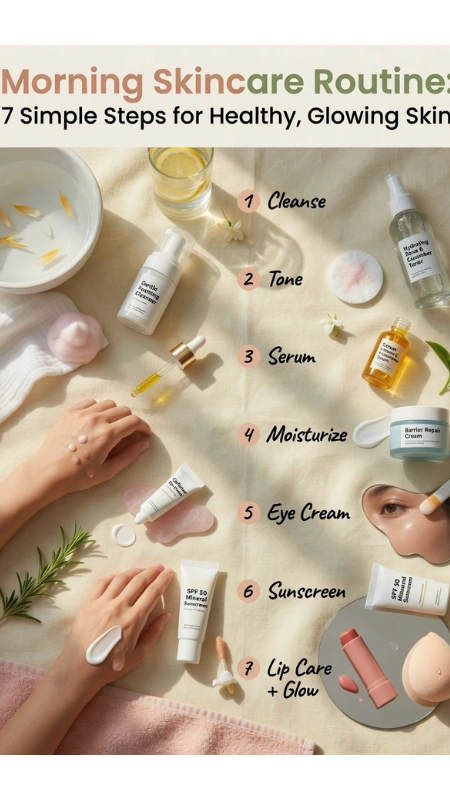
Why a Consistent Morning Skincare Routine Matters for Healthy Skin
Your nighttime routine focuses on repair while you sleep. Morning is different—it is about defense. During the day your skin faces ultraviolet radiation (even through windows and on cloudy days), pollution, free radicals, and visible light. These stressors break down collagen, trigger pigmentation, and weaken the skin barrier over time. A good morning skincare routine counters that by cleansing gently, delivering antioxidants, locking in moisture, and finishing with broad-spectrum sunscreen.
Dermatologists consistently point out that daily protection slows visible aging and lowers skin cancer risk. Studies show that pairing an antioxidant like vitamin C with sunscreen boosts photoprotection beyond SPF alone. Even a basic cleanser-moisturizer-SPF combination improves hydration, texture, and barrier function for many people. You will notice your skin looking fresher within a couple of weeks, with longer-term gains in firmness and even tone if you stick with it. The habit itself feels empowering—you start the day taking care of yourself in a tangible way.
Key benefits include:
- Better defense against free radical damage
- Improved product absorption for the rest of your routine
- Reduced risk of premature wrinkles, dark spots, and barrier issues
- A smoother base for makeup if you wear it
- Overall healthier-looking skin that holds up better through the day
The Essential 7-Step Morning Skincare Routine for Healthy Skin
Layer products from thinnest to thickest consistency. Wait 30–60 seconds between actives so they absorb properly. Use lukewarm water, pat your face dry with a clean towel (never rub), and apply everything to clean skin. The core non-negotiables are cleanse (or rinse), antioxidant, moisturizer if needed, and sunscreen. The extras refine results based on your needs. Total time stays short once it becomes habit.
Here is a quick-reference table to keep handy:
| Step | Action | Key Purpose | Recommended Ingredients/Textures | Tips by Concern |
|---|---|---|---|---|
| 1 | Cleanse or rinse | Remove overnight oil/sweat without stripping | Gentle, pH-balanced, sulfate-free; hyaluronic acid for dry | Rinse only if very dry or sensitive; gel for oily |
| 2 | Toner or essence (optional) | Balance pH, add light hydration, prep skin | Hyaluronic acid, glycerin, niacinamide; alcohol-free | Skip if your routine is minimal |
| 3 | Antioxidant serum | Neutralize free radicals, brighten, support collagen | 10–20% L-ascorbic acid vitamin C (+ vitamin E/ferulic) | Apply to dry skin; start lower % if sensitive |
| 4 | Hydrating/treatment serum | Targeted hydration or concern support | Hyaluronic acid (damp skin), niacinamide, peptides | Choose one main focus |
| 5 | Eye cream | Care for thinner under-eye skin | Caffeine, peptides, hyaluronic acid | Gentle patting with ring finger |
| 6 | Moisturizer | Seal previous layers, support barrier | Ceramides, glycerin; gel for oily, cream for dry | Lightweight daytime formulas |
| 7 | Sunscreen | UV and environmental shield | Broad-spectrum SPF 30–50+ | Two-finger rule; reapply outdoors |
Step 1: Gently Cleanse Your Face
Overnight your skin produces sebum and may collect a bit of sweat or residue. A gentle cleanse clears that slate so the rest of your products work better, without stripping the barrier. Many dermatologists say normal-to-dry or sensitive skin can simply rinse with lukewarm water most mornings. Oily or acne-prone skin usually benefits from a mild cleanser.
How to do it:
- Splash or wet your face with lukewarm water.
- Use a pea-sized amount of gentle cleanser (cream, milk, or low-foam gel).
- Massage for 20–45 seconds with clean fingertips.
- Rinse thoroughly.
- Pat dry.
Look for formulas with hyaluronic acid or ceramides. Avoid harsh sulfates if your skin feels tight afterward. This step sets everything else up for success.
Step 2: Apply a Hydrating Toner or Essence (Optional but Beneficial)
Modern toners are not the astringent versions of the past. A good one restores pH after cleansing, adds a light layer of hydration, and helps serums sink in more evenly. It is optional—many effective routines skip it—but helpful if your skin feels tight or you want extra prep.
Apply a few drops to your palms and press or pat onto your face and neck. Prefer hands over cotton pads to reduce waste and friction. Seek alcohol-free options with hyaluronic acid, glycerin, niacinamide, or soothing ingredients like centella. Skip this if you prefer a bare-bones morning skincare routine or have very reactive skin.
Step 3: Layer an Antioxidant Serum (Vitamin C Powerhouse)
This is one of the highest-impact morning steps. Vitamin C (especially L-ascorbic acid at 10–20% in a stable, low-pH formula) acts as a potent antioxidant. It neutralizes free radicals from UV and pollution, supports collagen production, helps fade dark spots by inhibiting excess pigment, and works synergistically with sunscreen for better overall protection.
Apply a few drops to clean, dry skin after cleansing or toning. Let it absorb for about 60 seconds. You may feel mild tingling at first—that often settles. Store the bottle in a cool, dark place because vitamin C oxidizes easily (it turns darker when it does). Derivatives can be gentler if pure L-ascorbic acid bothers you. Consistent use often brings brighter tone and smoother texture in 4–12 weeks. Pair it with your SPF every single day for the best results.
Step 4: Add a Hydrating or Targeted Treatment Serum
Now address your specific needs. Hyaluronic acid draws in moisture and plumps when applied to slightly damp skin. Niacinamide (around 5%) helps regulate oil, strengthen the barrier, calm redness, minimize the look of pores, and support even tone. Peptides can aid firmness. These two—hyaluronic acid and niacinamide—pair especially well: one hydrates, the other helps lock it in and fortify.
Layer the thinnest first. One or two well-chosen serums beat piling on many. Focus on your main concern (dehydration, oiliness, dullness, or early lines) rather than trying to fix everything at once.
Choosing Based on Goals
- Brightening and pigment: Vitamin C already covered; add niacinamide or azelaic if needed.
- Hydration: Multi-weight hyaluronic acid.
- Oil and texture: Niacinamide.
- Early aging: Peptides or additional antioxidants.
Step 5: Nourish the Delicate Eye Area
The skin around your eyes is thinner and shows fatigue, puffiness, or fine lines sooner. A dedicated eye cream or gel with caffeine (for depuffing), peptides, or hyaluronic acid gives targeted support. Use your ring finger to gently pat a tiny amount along the orbital bone—never rub. Some people find their regular moisturizer or a multitasking SPF covers this area fine, so treat it as optional if your routine feels full.
Step 6: Seal Everything with Moisturizer
Moisturizer locks in the serums and water, reduces transepidermal water loss, and keeps the barrier strong. Even oily skin needs hydration—oil and water are different. Dehydrated oily skin often produces more sebum as compensation.
Choose texture by type: lightweight gel or gel-cream for oily/combination; lotion or cream with ceramides, cholesterol, and fatty acids for dry or sensitive. If your sunscreen is rich enough, you can sometimes combine steps. Apply a blueberry-sized amount to face and neck.
Step 7: Finish with Broad-Spectrum Sunscreen (Non-Negotiable)
This is the single most important step in any morning skincare routine. UV exposure drives the majority of visible aging and raises skin cancer risk. Apply every day—indoors near windows, on cloudy days, year-round. Choose broad-spectrum SPF 30 or higher (50 is fine and helps compensate for typical under-application).
Use enough: roughly a quarter teaspoon or the length of two finger strips (index and middle) for face; add more for neck and ears. Apply as the final skincare layer, 15 minutes before heading out. Reapply every two hours with direct sun exposure, after sweating, or swimming. Mineral options (zinc oxide, titanium dioxide) suit sensitive skin; tinted versions with iron oxides add visible light protection helpful for melasma or deeper skin tones. The best sunscreen is the one you will actually wear daily.
Customizing Your Morning Skincare Routine for Different Skin Types
Dry or Dehydrated Skin
Rinse or use a creamy cleanser. Lean into hyaluronic acid on damp skin, richer ceramide creams, and a moisturizing SPF. Avoid anything that foams aggressively.
Oily or Acne-Prone Skin
Gentle gel cleanser. Niacinamide and lightweight, oil-free gels or fluid moisturizers. Matte or gel SPF that will not clog pores. You can often keep the routine shorter.
Combination Skin
Cleanse as needed. Use lighter textures on the T-zone and slightly richer ones on dry cheeks. Niacinamide helps balance.
Sensitive or Redness-Prone
Minimal steps. Fragrance-free everything. Soothing ingredients (centella, ectoin, azelaic acid). Mineral sunscreen. Introduce actives slowly and patch-test.
Mature Skin or Hyperpigmentation Concerns
Prioritize stable vitamin C, peptides, strong UVA protection, and tinted mineral SPF. Consistency with sunscreen prevents new spots while actives fade existing ones.
Always patch-test new products and add one at a time so you can spot what works or irritates.
Common Mistakes to Avoid in Your Morning Skincare Routine
- Skipping or under-applying sunscreen—most people use far less than needed, slashing the labeled SPF.
- Over-cleansing or using harsh formulas that strip the barrier and cause rebound oil or irritation.
- Wrong order (thick products before thin ones) or layering too many strong actives that clash or overwhelm.
- Using retinol or strong exfoliating acids in the morning—they increase sun sensitivity; save them for night.
- Skipping moisturizer because your skin feels oily (this often worsens dehydration and oil production).
- Not waiting briefly between layers or applying serums to the wrong skin state (dry vs. damp).
- Chasing every viral product instead of sticking to a simple, consistent routine that matches your skin.
Less irritation and better results come from doing the right things reliably rather than doing more.
Pro Tips for Maximizing Your Morning Skincare Routine Results
- Give any new routine at least two to four weeks before judging—skin cell turnover takes time.
- Extend products down your neck, chest, and the backs of your hands.
- Multi-task when possible (tinted SPF, moisturizer with SPF, serum-moisturizer hybrids) to keep steps low.
- Store vitamin C properly and replace it if it darkens significantly.
- Support your topical routine from the inside with a diet rich in vitamin C and overall good habits—sleep, stress management, and not smoking make a visible difference.
- If you have persistent concerns (acne, severe dryness, melasma), see a board-certified dermatologist for personalized advice or prescriptions.
- Keep a simple travel version of your core products so you never skip protection.
Frequently Asked Questions About Morning Skincare Routine
What is the best morning skincare routine for beginners?
Start with three or four steps: gentle cleanse or rinse, moisturizer, and broad-spectrum SPF 30+. Add a vitamin C serum once that feels easy. This covers the essentials for healthy skin without overwhelm.
How long should a morning skincare routine take?
Most people finish in 5–10 minutes once products are familiar. The key is consistency, not speed-racing through layers.
Can I use the same products morning and night?
Some overlap is fine (cleanser, moisturizer, niacinamide, hyaluronic acid). Keep sunscreen for morning only. Save retinol, stronger acids, and heavier occlusives for evening repair.
Do I really need toner in my morning skincare routine?
No. It is helpful for some but not essential. If your skin feels balanced after cleansing and your serums absorb well, you can skip it.
How soon will I see results from a consistent morning skincare routine?
Hydration and a fresher look often appear in days to two weeks. Brighter tone and smoother texture from vitamin C typically show in 4–6 weeks, with fuller collagen and barrier benefits over 8–12 weeks of daily use plus sunscreen.
Is sunscreen necessary every day in my morning skincare routine, even indoors?
Yes. UVA rays penetrate glass, and incidental exposure adds up. Daily broad-spectrum SPF is the foundation of preventing damage and aging.
What order should I follow in a morning skincare routine?
Cleanse → (toner) → antioxidant/treatment serums (thin to thick) → eye cream → moisturizer → sunscreen. That sequence maximizes absorption and efficacy.
Conclusion: Start Your Day (and Healthy Skin Journey) Right
A thoughtful morning skincare routine does more than prep your face—it protects the skin you will live in for decades and gives you a small daily win. The seven steps outlined here keep things simple yet effective: cleanse gently, add antioxidants and targeted hydration, seal with moisturizer, and never skip broad-spectrum sunscreen. Customize by your skin type, avoid the common pitfalls, and stay consistent.
You do not need perfection or a cabinet full of products. Start today with what you already own that fits these categories, or pick up a solid cleanser, vitamin C, moisturizer, and SPF 30+. Give it two weeks and notice how your skin feels and looks by midday. Healthy, glowing skin is built one morning at a time.
If this guide helped you, try the routine and share how your skin responds in the comments, or pass it along to someone who still rushes out the door bare-faced. For stubborn concerns, book time with a dermatologist—they can fine-tune things further. Your future self (and your skin) will thank you for beginning now.